Under the trend of "dual carbon", how to build a zero-carbon data center should focus on "where does the electricity come from?" Where is it hot?" (1)
Publication Date:2024-12-16
Share to
China's total carbon emissions in 2022 will be about 104~10.6 billion tons (data from the Institute of Climate Change and Sustainable Development of Tsinghua University, and refer to the China Carbon Accounting Database (CEADs), the average carbon emissions per Chinese person are about 7.3 tons, and it is expected that by 2030, the peak of our country's carbon peak will be 110~116 tons, and our country's total carbon emissions will decline year by year from 2030 until carbon neutrality is achieved by 2060. This is the general background trend of our country's "double carbon". our country In 2022, the national data center carbon emissions will be about 163 million tons (data source: research released by Greenpeace), accounting for 1.5% of the country's total carbon emissions, while in 2022 our country the total size of the data center market will exceed 280 billion yuan, equivalent to US$38.76 billion (data source: "Data Center White Paper (2022)" released by the China Academy of Information and Communications Technology). From this, it is concluded that for every $1 of data center revenue generated by our country's data centers in 2022, 4.2 kg of carbon emissions will be generated, and our country's total GDP in 2022 will be 121 trillion yuan, equivalent to 16.7 trillion US dollars at the current exchange rate, and calculated according to our country's total carbon emissions of 10.4 billion tons in 2022: for every $1 of social GDP income generated, 0.62 kg of carbon emissions will be generated; The total global carbon emissions in 2022 will be 40.5 billion tons (data from the International Organization for Scientific Cooperation) Global Carbon Programme" (GCP) Global Carbon Budget 2022 report), while global GDP in 2022 was about $101.6 trillion. The same calculation can be obtained: for every $1 of global GDP generated, 0.399 kg of carbon emissions are generated. Global GDP produces $1, which is equivalent to emitting 0.399 kg of CO2, while our country's GDP generates $1, which is equivalent to emitting 0.62 kg of CO2, while our country's data center GDP generates $1, which is equivalent to emitting 4.2 kg of CO2, from the perspective of social GDP, our country's carbon emissions are much higher than the international average carbon emission level, especially in the field of data centers, the gap is very obvious, so why do we need to strengthen the realization of the "dual carbon" strategy, especially in the specific industry of data centers. At present, the top priority in the design, construction and operation of data centers is energy conservation and emission reduction. As the "dual carbon" goal approaches, CO2 emissions from our country's data centers continue to rise, and energy conservation and emission reduction have become a top priority. According to Article 5 of the document "Several Provisions on Further Strengthening the Energy Conservation Review of Data Center Projects" dated July 27, 2021, "Projects completed in 2021 and later are encouraged to increase the proportion of annual renewable energy utilization to annual energy consumption by 10% per year, and achieve 100% by 2030 (excluding the proportion of existing renewable energy in the power grid)". In other words, by 2030, our country's data centers will use 100% renewable energy, that is, data centers will achieve zero carbon emissions.
 
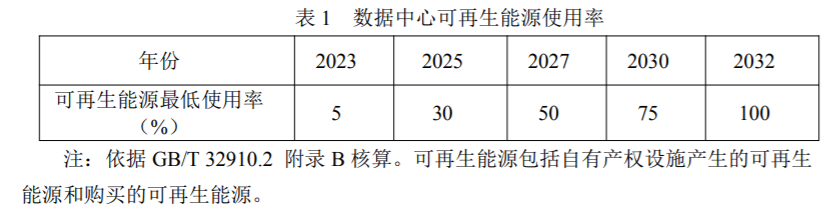
According to the Ministry of Ecology and Environment and the Ministry of Finance, entrusted by the Ministry of Ecology and Environment and the Ministry of Finance, the "Green and Low-carbon Data Center Government Procurement Demand Standard (Trial)" jointly prepared by the Ministry of Finance, the Ministry of Ecology and Environment and the Ministry of Industry and Information Technology jointly compiled by the Ministry of Finance and the Ministry of Industry and Information Technology jointly issued the "Green Data Center Government Procurement Demand Standard (Trial)", which mentions the renewable energy utilization rate of the data center as follows:

The standard requires that the use of renewable energy in data centers reach 100% by 2032, that is, data center carbon neutrality. The trial operation of this standard will bring more and more attention to zero-carbon data centers.
How to promote the construction of zero-carbon green data centers? Starting from the data center itself, the direction of breaking through zero carbon emissions mainly focuses on green power use, natural cold source utilization, advanced technological innovation, and heat recovery.
 1. Utilization of green power resources
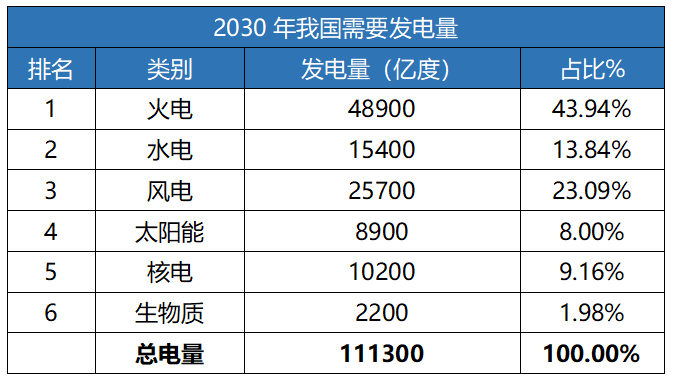
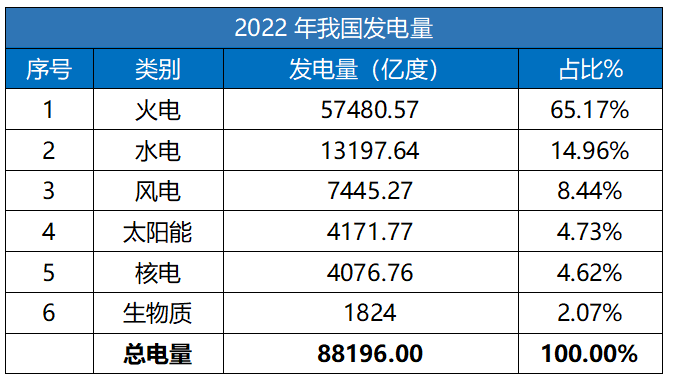
Green electricity is the key condition for data centers to achieve zero carbon emissions. Green electricity, referred to as "green electricity", refers to the process of power generation, carbon dioxide emissions are zero or close to zero, compared with thermal power generation, "green electricity" is electricity with a lower impact on environmental impact. The main sources of green electricity in our country are solar energy, wind energy, hydropower, nuclear power, biomass energy, etc. According to data from the Ministry of Energy, our country's total power generation in 2022 will be about 8.8 trillion kWh, of which thermal power generation will be about 5.75 trillion kWh, accounting for 65%; hydropower generation was 132 million kWh, accounting for 15%; wind power generation was 0.74 trillion kWh, accounting for 8.4%; solar power generation was 0.42 trillion kWh, accounting for 4.7%; nuclear power generation was 0.41 trillion kWh, accounting for 4.6%. In the national "dual carbon" plan, from now until 2030 is the accelerated transformation period of new energy, new energy will gradually become the main body of power generation increase, but thermal power generation is still the "ballast stone" of power security. According to the "Energy Development Strategic Action Plan (2014-2020)" issued by the General Office of the State Council on November 19, 2014, by 2030, the proportion of traditional petrochemical energy consumption will drop to 68%, while the proportion of clean energy will increase from 19% to 32%, of which the proportion of nuclear power will increase from 1% in 2015 to 5%. Compared with the power energy structure in 2022, this goal has been achieved, but due to the "dual carbon" strategy, we are still expanding green energy power, such as solar and wind energy. In the field of data centers, there are about 83,000 data centers in our country up to now, and the total power consumption of data centers in the country in 2022 will exceed 285 billion kWh, accounting for 3.24% of the country's total electricity consumption, which is close to the power generation of the three Three Gorges Dams (the average annual power generation of the Three Gorges Dam in 2018~2022 is 100.4 billion kWh). It can be seen that the power consumption of data centers is very large. According to the calculation of the carbon emission factor of the State Grid of China of China of China (the data comes from the "Notice on Doing a Good Job in the Management of Corporate Greenhouse Gas Emission Reporting in 2022" issued by the Department of Climate Change of the Ministry of Ecology and Environment before March 31, 2022), the total carbon emissions of data centers in 2022 are about 166 million tons (this calculation verifies the Greenpeace research data of 163 million tons at the beginning), accounting for about 1.6% of the total carbon emissions of the whole society in 2022. According to the national policy requirements mentioned above to achieve comprehensive green power energy in data centers by 2030, let's look at a set of data from the Institute of Climate Change and Sustainable Development of Tsinghua University, which is about the power generation required by our country to control climate rise to 1.5°C in accordance with the strict "dual carbon action policy" in 2030, as follows:

Then compare the 2022 national electricity consumption data from the National Energy Administration, as follows:

It is not difficult to see that the proportion of thermal power will drop significantly to less than 45% in 2030, nuclear power and solar power will more than double, and wind power will increase from 8.44% to 23%, almost tripling. Hydropower has not grown much, and biomass energy is negligible. Therefore, in the use of green electricity in data centers, wind power and solar energy have become the main power for most data centers in the future.
Although our country will achieve "carbon peak" in 2030, the use of green electricity is very important in data centers to achieve comprehensive "carbon neutrality". This is why the state has issued a series of policies such as "East Data and West Computing", which is to concentrate data center resources, and formulate a unified policy for data center location, layout, planning and management from the grand strategy of green energy supply and computing power use demand, which is also the purpose of East Data and West Computing. There are two major benefits after achieving the great goal of "East Data and West Computing": first, it ensures that all data centers have sufficient green power supply and optimal PUE efficiency, laying the foundation for zero carbon emissions; The second is to ensure the optimal allocation of concentrated and decentralized computing power, and properly handle the complex relationship between the front and rear, the central and local coordination, taking into account the national economic layout and disaster recovery needs. It is precisely for these reasons that the use of green electricity must be considered in the planning of data centers, such as the construction of photovoltaic power generation and wind power plants in data centers, as well as data centers built near hydropower stations.
 
For most data centers, the purpose of using green electricity can also be achieved by purchasing green electricity. In accordance with the relevant requirements of the National Development and Reform Commission and the National Energy Administration's "Notice on Promoting Electricity Trading Institutions to Carry out Green Electricity Certificate Transactions" (Development and Reform Office Ti Gai [2022] No. 797), the Beijing Electricity Trading Center has compiled the "Green Electricity Certificate Trading Work Plan" and the "Green Electricity Certificate Trading Implementation Rules (Trial)", conducted in-depth research on the demand for green certificates in the market, and efficiently developed a green certificate trading platform, which has officially opened the green electricity certificate trading market on September 16, 2022. In the report of the 20th National Congress of the Communist Party of China, General Secretary Xi Jinping clearly stated that green consumption should be advocated and the formation of green and low-carbon production methods and lifestyles. Implementing the decisions and arrangements of the Party Central Committee and the State Council, the National Energy Administration actively promotes the trading of green electricity certificates and guides green electricity consumption.
 
In the foreseeable future, actively engaging in green electricity trading is a guarantee for achieving zero-carbon data centers. For example, Qinhuai Data purchased 220 million kWh of green electricity in 2022, and the cumulative amount of green electricity obtained through transactions was nearly 770 million kWh. For example, Tencent has signed a total of 504 million kWh of green power trading contracts in 2022. As of 2023, Baidu has signed a contract to introduce 1 billion kWh of green electricity, etc.
 
According to data released by the National Energy Administration, 20.6 million green certificates will be issued in 2022, corresponding to 20.6 billion kWh of electricity, an increase of 135% over 2021; The number of transactions reached 9.69 million, corresponding to 9.69 billion kWh, an increase of 15.8 times over 2021. Since the Energy Bureau and the National Development and Reform Commission officially approved the "Green Power Trading Pilot Work Plan" in September 2021 and opened the prelude to domestic green electricity trading, as of the end of 2022, our country has issued about 59.54 million green certificates, with a cumulative number of transactions of 10.31 million, effectively promoting the green and low-carbon transformation and high-quality development of the economy and society.
Related Newsmore