


Intelligent development
The future development of intelligent computer rooms mainly includes the following points:
1. Intelligent infrastructure
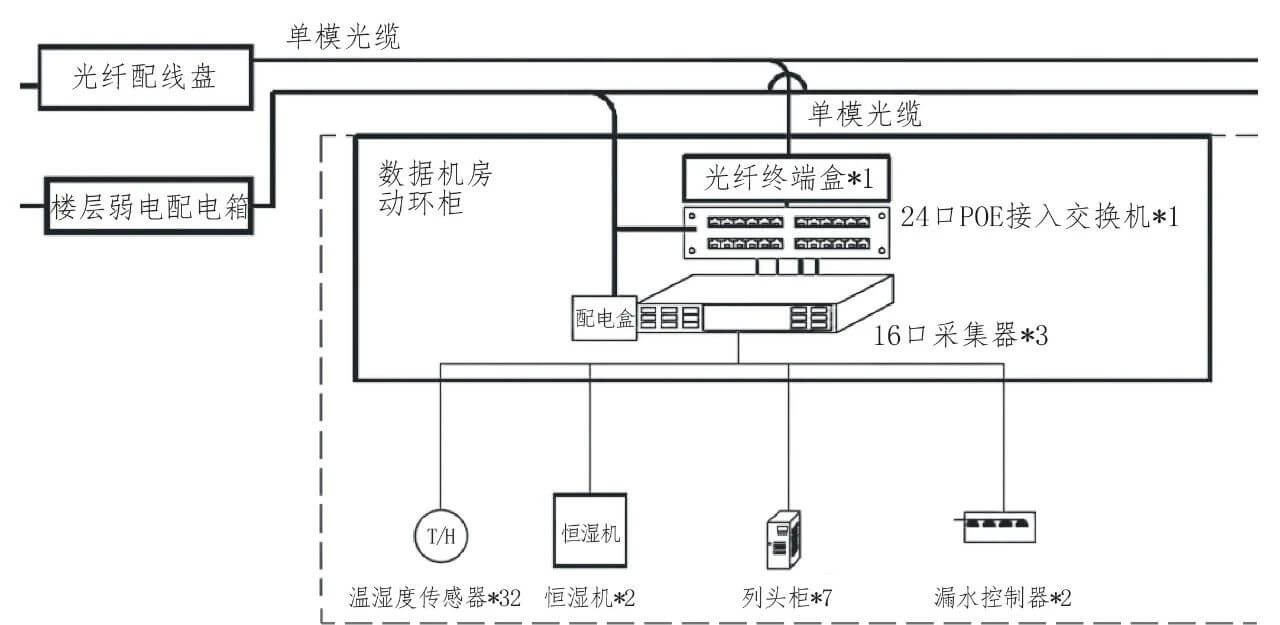
● Intelligent monitoring system: Use IoT technology and sensors to monitor environmental parameters such as temperature, humidity, and power supply in the data center in real time to ensure the stable operation of the data center. Figure 2 below is the power environment monitoring system diagram:
● Intelligent control system: automatically adjusts the operating parameters of the data center infrastructure, such as air conditioning, UPS, etc., according to environmental parameters and equipment operating status, to reduce energy consumption. For example, using AI group control technology to control the cold source system, after the implementation of a project, the CLF can be reduced by about 25%, the energy saving rate of the refrigeration station is greater than 20%, the annual electricity saving is expected to be greater than 1.75 million kWh, and the average annual PUE can be reduced to less than 1.25.
● Intelligent storage management: AI algorithms are used to intelligently schedule and optimize the configuration of storage resources to improve the utilization and performance of storage devices.
2. Data processing and analysis
● Intelligent data processing: Utilize machine learning and other technologies to efficiently process massive data and tap potential value.
● Intelligent analysis and prediction: Based on historical data and real-time monitoring data, intelligent analysis and prediction of data center operation status are performed to support decision-making.
3. Intelligent operation management
● Intelligent resource allocation: Automatically adjust the computing, storage, and network resources of the data center according to business needs and market changes to improve resource utilization.
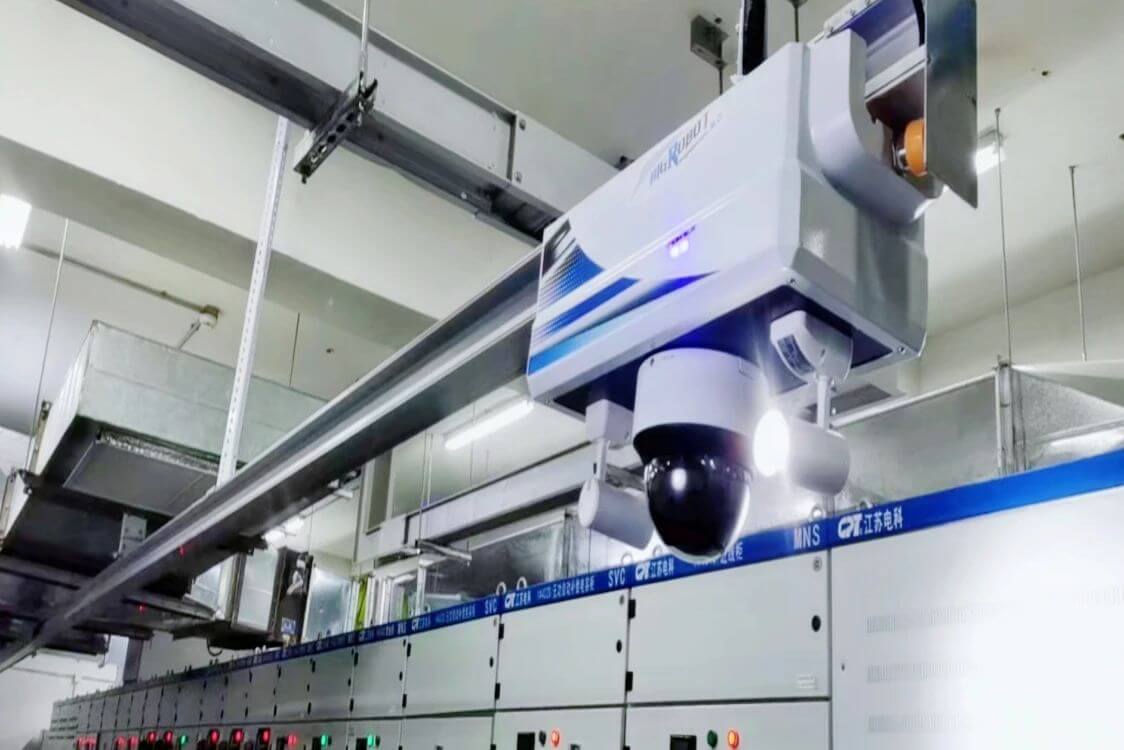
● Intelligent O&M services: AI algorithms and automation technologies are used to predict, warn and handle data center faults, reducing O&M costs. For example, a project adopts an unattended approach in the opening and closing station and substation and distribution room, sets up inspection robots, monitors the status of on-site equipment in real time, and conducts video linkage with abnormal alarms in the circuit, which is expected to save a total of 16 manpower and 900,000 yuan in labor costs every year.
4. Intelligent energy efficiency management
The energy consumption management of traditional computer rooms is not ideal through data performance, and the construction of most projects ignores the later operation and maintenance, resulting in the system not achieving the expected results in the operation and maintenance stage. And too much attention is paid to purchasing hardware from well-known brands and ignoring the importance of software, resulting in equipment not being intelligent enough when running, and many jobs still rely on manual operation. A large amount of running data cannot be effectively used to guide operation, and even data loss occurs, resulting in waste of resources. However, the use of intelligent energy efficiency management methods can effectively solve these pain points faced by traditional computer rooms.
● Intelligent energy consumption monitoring: Real-time monitoring of data center energy consumption, providing a basis for enterprises to formulate energy conservation and emission reduction strategies.
● Intelligent energy-saving control: Intelligent regulation and control of the data center energy system through AI algorithms to reduce energy consumption.
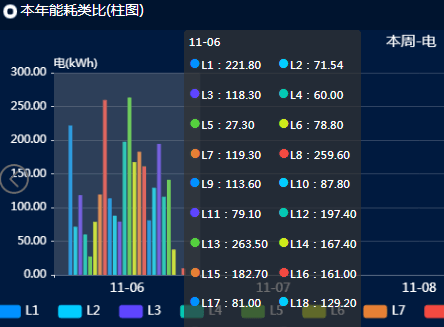
The energy management system can achieve "monitoring and pipe integration" of the transformer and distribution system, water supply system, lighting system, air conditioning and ventilation system, and main energy-consuming equipment in the computer room, so as to realize the monitoring and controllability of terminal equipment. Real-time online measurement, intelligent monitoring, control and adjustment, fault monitoring, safety alarm and protection of various energy (resources) supply and use in the building. We can visually see each data through the software and analyze the data, as shown in Figure 3 below:
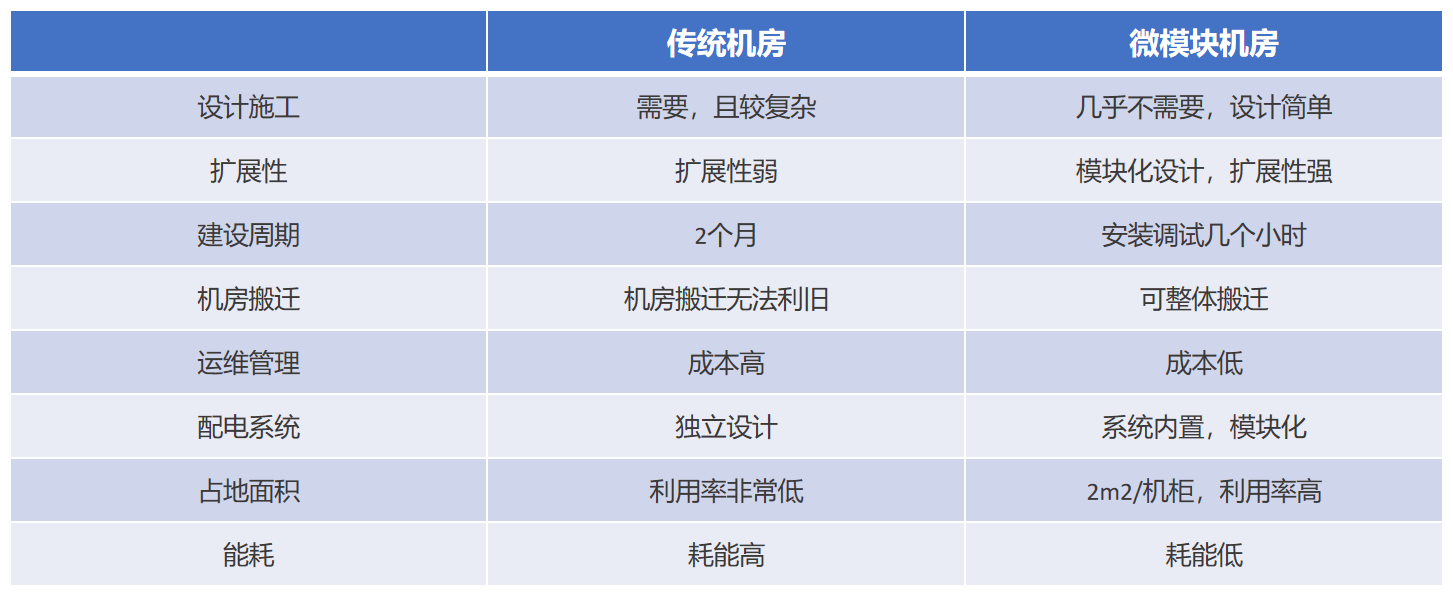
Under the premise of energy conservation and consumption reduction, for the renovation or new data center computer room, you can consider using micro modules, which have the advantages of flexible deployment, high integration, installation worry and effort, and compared with traditional computer rooms, it also has the following advantages:
5. Smart fire protection
With the rapid development of the Internet of Things and artificial intelligence, smart fire protection makes fire protection work more automated, intelligent, systematic and refined. The so-called "intelligence" is to use the network to connect various independent systems, improve the predictive ability, and minimize the risk and impact of fire, such as the integrated design of security and fire protection, integrate intelligent algorithms into thermal imaging cameras, and configure deep learning intelligent analysis servers at the backend to improve predictive sensing capabilities.
Smart fire protection has the following advantages:
● Hidden danger perception: Traditional fire protection mainly relies on manual inspection and inspection, while smart fire protection achieves automated and intelligent perception and monitoring by installing intelligent sensors and monitoring equipment.
● Early warning style: Traditional fire protection mainly discovers fire hazards through human strength and experience judgment, and the early warning method is single and limited by human factors and experience level, and the timeliness is poor, while smart fire protection can collect, process, analyze data in real time, and warn through text messages, phone calls, voice, APP and other methods.
● Data processing: Traditional fire data processing mainly relies on manual analysis and processing, while smart fire protection uses big data, cloud computing and other analysis technologies to analyze and process various data collected in real time to provide more accurate and comprehensive fire safety information.
● Fire management: The traditional fire management method is relatively extensive and lacks systematic and scientific management methods, while smart fire protection digitally manages the whole process of monitoring, maintenance, and disposal through information and intelligent technology to achieve comprehensive and effective fire safety supervision.
● Command and dispatch: The command and dispatch of traditional fire protection mainly relies on manual judgment and decision-making, while smart fire protection achieves rapid and accurate command and dispatch of rescue personnel, vehicles, equipment, etc. through the intelligent system platform.
● Rescue methods: The rescue methods of traditional fire protection mainly rely on the on-site operation of firefighters, while smart fire protection can achieve more efficient rescue through collaborative fire rescue stations, micro fire stations, remote control, intelligent robots, etc.
● In terms of visual supervision: the traditional supervision method of fire protection is relatively simple, only unilaterally supervising a certain content. Smart fire protection can be combined with a 3D visualization platform to comprehensively supervise each end equipment detector.
6. Digital twin centralized control system
Digital twin is to use physical models, sensor updates, operation history and other data to integrate multi-discipline, multi-physical quantity, multi-scale, multi-probability simulation process, and complete the mapping in virtual space, so as to reflect the whole life cycle process of the corresponding physical equipment. A digital twin is a concept that transcends reality and can be seen as a digital mapping system of one or more important, interdependent equipment systems.
At present, the digital twin intelligent centralized control system has been gradually applied to the field of intelligent buildings. Through the cooperation with the platform involving the all-round integration of more than 20 subsystems and the mature and stable Internet of Things technology, the digital twin centralized control system will inevitably be an important technology for monitoring and optimizing building operation and management in the future. It will play an important role in improving the intelligence level and operational efficiency of buildings, achieving green and low-carbon throughout the life cycle, improving safety and reliability, and reducing operation and maintenance costs and energy consumption. Compared with system integration (IBMS), digital twin systems can complement and support system integration based on the data collected by system integration, using sensor technology, cloud computing technology, big data technology, artificial intelligence and other technical means.
Review
In short, the development trend of data center intelligence is multifaceted, including automated operation and maintenance, cloud computing integration, artificial intelligence applications, green energy saving, high availability and high scalability, etc. These trends will help improve the O&M efficiency and reliability of data centers, reduce costs and energy consumption, and promote sustainable development throughout the data center life cycle.


