


How to extinguish a fire in a data center design
4.1 Fire extinguishing medium
Fire extinguishing media refers to various substances used to extinguish fires, and common fire extinguishing media include water-based fire extinguishing agents, foam fire extinguishing agents, gas fire extinguishing agents and dry powder fire extinguishing agents.
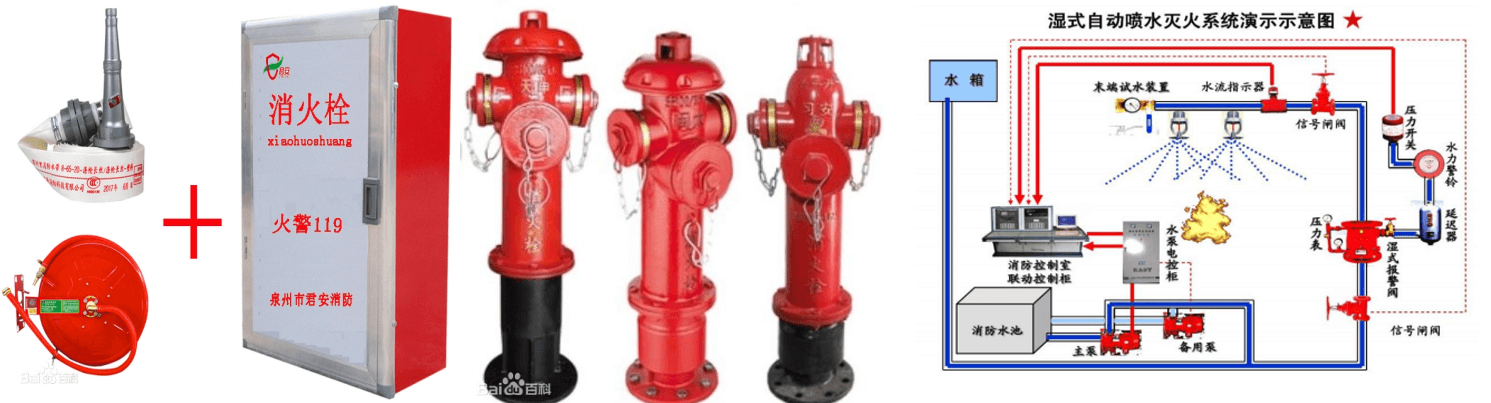
1. Water-based fire extinguishing agent: the main system includes fire hydrant system, automatic water spray system, water spray system, etc.
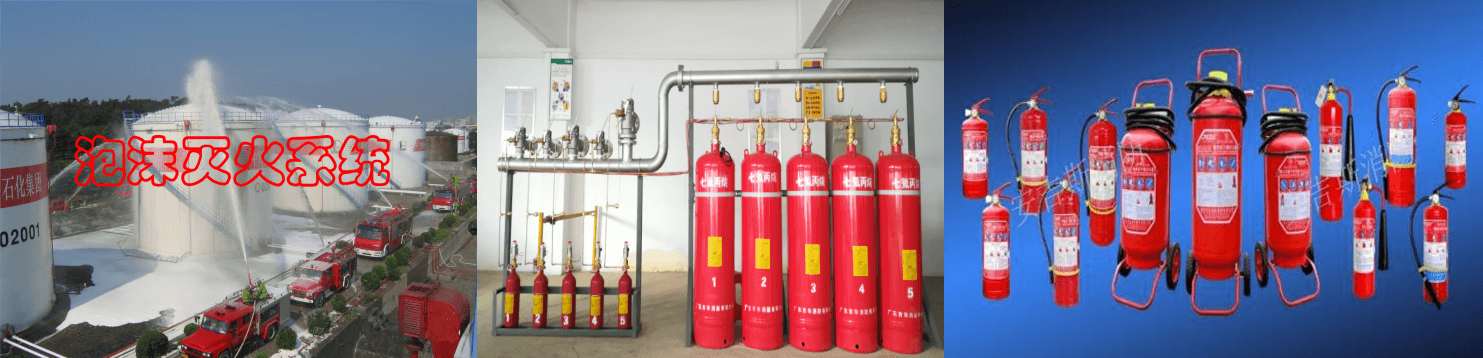
2. Foam fire extinguishing agent: Foam fire extinguishing system is divided into three types of foam system: low, medium and high, and its fire extinguishing mechanism is mainly isolation and accompanied by asphyxiation.
3. Gas fire extinguishing agent: The method of using gas as a fire extinguishing agent mainly includes heptafluoropropane (HFC-227ea) gas fire extinguishing system, IG-541 gas fire extinguishing system, etc.
4. Dry powder fire extinguishing agent: mainly ammonium phosphate and bicarbonate fire extinguishing agent.
4.2 Fire extinguishing mechanism
The basic principles of fire extinguishing include cooling, chamber breathing, isolation and chemical suppression, the first three are mainly physical processes, and the latter is chemical processes.
1. Cooling and extinguishing: The combustion reaction will be stopped when the combustible material is cooled below the ignition point. If a fire of general solid matter is extinguished with water, the water absorbs a lot of heat, causing the temperature of the burning material to drop rapidly and the flame to extinguish.
2. Suffocation and fire extinguishing: reduce the concentration of oxygen so that the combustion cannot be sustained, and achieve the purpose of fire extinguishing. For example, carbon dioxide, nitrogen, etc. are used to dilute the concentration of oxygen. Suffocation fire extinguishing is mostly used in confined or semi-confined spaces.
3. Isolation and fire extinguishing: isolate combustibles from flame and oxygen to automatically stop the combustion reaction. For example, cutting off the passage of combustible gas or liquid flowing to the fire area; Or spraying fire extinguishing agents to isolate combustibles from oxygen and heat, which is a commonly used fire extinguishing method.
4. Chemical inhibition fire extinguishing: The oxidation reaction in the flame combustion of substances is carried out by chain reactions. Hydrocarbons are activated during combustion, producing a large number of free radicals, chain reactions of H, OH and 0. Fire extinguishing agents can inhibit and reduce the concentration of free radicals, and stop the chain reaction to extinguish the fire. For example, heptafluoropropane gas is used to quickly seize the carrier free radicals in the combustion process, block the combustion chain, and stop the combustion.
4.3 Fire water source
Municipal water supply, fire pond, and natural water sources can all be used as fire water sources, and rainwater clear water pools, reclaimed water pool pool water storage and water feature water can also be used as fire water sources. Fire water sources should give priority to municipal water supply. The water quality of the fire fighting water source should meet the requirements of the fire extinguishing facility itself, as well as its functions such as fire extinguishing, fire control, suppression, cooling and cooling. The pH value of the water usually filled in the fire pipeline should be 6.0~9.0. When rainwater clear water tanks, reclaimed water pools, swimming pool water storage and water feature water are used as fire water sources, there should be technical measures to ensure that the water quantity and water quality required by the fire water supply system can be met under any circumstances.
4.4 Fire alarm, fire linkage, and personnel evacuation in the early stage of the fire
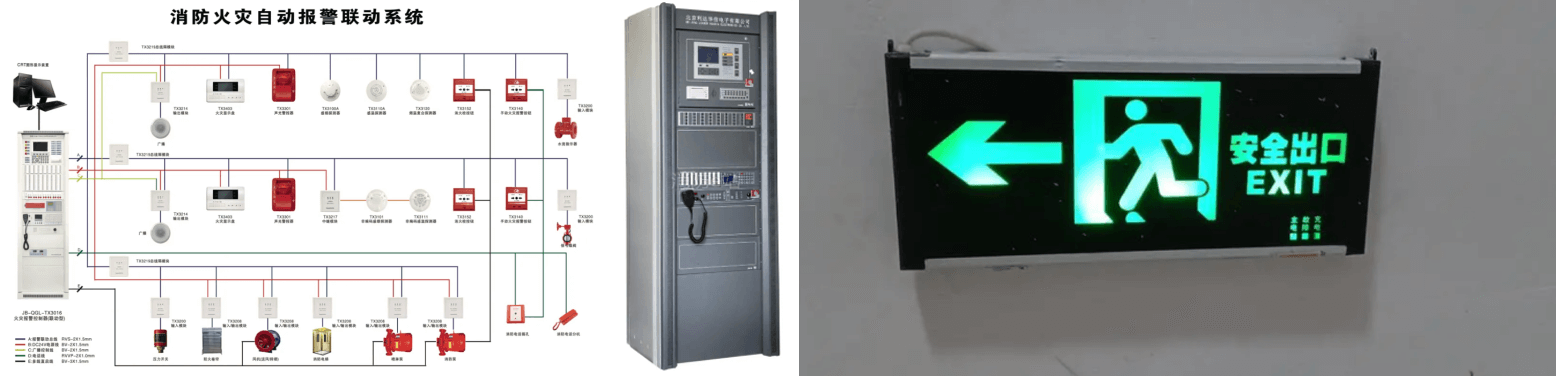
1. Receive the fire alarm signal: After receiving the alarm signal from the smoke or temperature detector to the fire alarm system, the fire control center can quickly determine the corresponding fire extinguishing plan according to the location of the alarm signal and the fire situation.
2. Start the fire linkage system: The fire control center can activate the relevant fire fighting equipment, facilities and systems through the linkage controller to complete the fire extinguishing task in a coordinated manner. For example, start the fire pump, sprinkler system, smoke exhaust system, etc.
3. Monitoring and adjustment: During the fire extinguishing process, the fire control center should monitor fire-fighting equipment and facilities in real time, and adjust relevant parameters as needed to ensure the normal operation of the equipment and the effectiveness of fire extinguishing.
4. Cooperate with personnel evacuation: In the event of a fire, personnel should be immediately organized to evacuate, and the location of the evacuation route and safe exit should be informed. At the same time, the fire control center can issue evacuation instructions to personnel through broadcasting systems and other equipment, and inform them of corresponding safety knowledge and self-rescue measures.
4.5 Fire hydrant fire extinguishing system
The fire hydrant fire extinguishing system is the most important and common water fire extinguishing facility in the building. It is a humanly operated and highly mobile fire extinguishing equipment. The fire hydrant system has the characteristics of dense jet, concentrated water flow, strong impact, long range, and not affected by high temperature flue gas. It can extinguish not only the initial fire, but also the one that is burning violently.
Data Center Design Code GB50174-2017, Article 13.1.6 stipulates that the data center should be equipped with indoor fire hydrant system and building fire extinguishers, and the indoor fire hydrant system should be equipped with fire hose reels.
The provisions on the layout of fire hydrants in the "Technical Regulations for Fire Water Supply and Fire Hydrant Systems" GB50974-2014 are as follows:
Outdoor fire hydrant layout:
7.2.5 The protection radius of outdoor fire hydrants should not exceed 150m, and the spacing should not be greater than 120m.
7.3.3 Outdoor fire hydrants should be evenly arranged along the surrounding area of the building, and should not be centrally arranged on one side of the building; The number of outdoor fire hydrants on the side of the building fire fighting surface should not be less than 2.
Indoor fire hydrant layout:
7.4.6 The arrangement of indoor fire hydrants shall meet the requirements of two strands of enrichment water columns with two fire water guns on the same plane to meet the requirements of any part at the same time, but the building height is less than or equal to 24.0m and the volume is less than or equal to 5000m³ Multi-storey warehouses, the building height is less than or equal to 54m, and each unit is equipped with an evacuation staircase, and the places specified in Table 3.5.2 of this specification can use one fire water gun to fill the water column with one strand to reach any part of the room.
7.4.8 The installation height of the fire hydrant plug in the building should be convenient for the connection and use of the fire hose, and its height from the ground should be 1.1m; the water outlet direction should be convenient for the laying of the fire hose, and should be at a 90° angle or down from the wall where the fire hydrant is installed.
7.4.10 Indoor fire hydrants should be calculated according to the straight-line distance, and should comply with the following regulations:
(1) The fire hydrant is arranged according to the 2 strands of 2 fire water guns, and the spacing between the fire hydrants should not be greater than 30.0m;
(2) The fire hydrant is arranged according to the water column of one fire water gun, and the spacing between fire hydrants should not be greater than 50.0m.
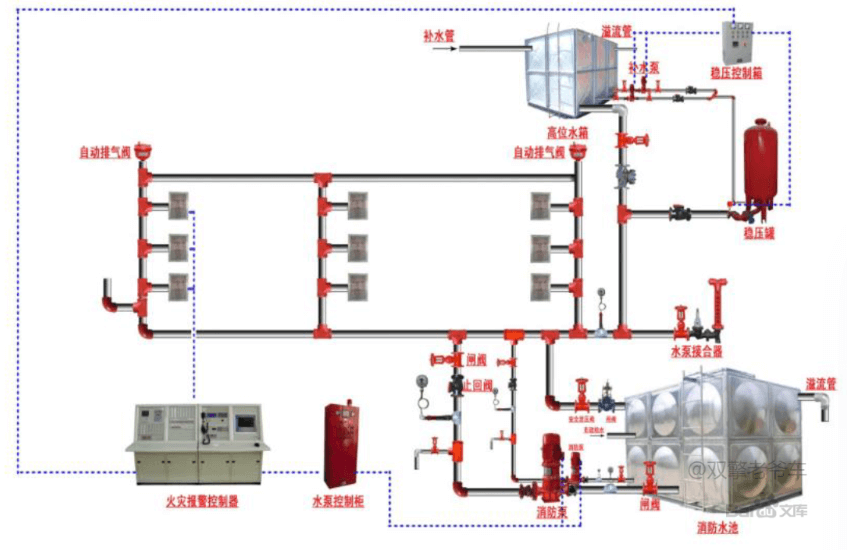
The indoor fire hydrant fire extinguishing system is composed of water source, pumping station, pipe network, pump coupler and fire hydrant, etc., and can be divided into ultra-high pressure fire hydrant system, temporary high-pressure fire hydrant water supply system and low-pressure fire hydrant water supply system according to the pressurization method.
4.6 Automatic sprinkler system
An automatic sprinkler system consists of sprinklers, alarm valves, water flow alarm devices (water flow indicators or pressure switches), pipes, water supply facilities, etc., and is an automatic fire extinguishing system that can spray water in the event of a fire. The system is mainly used to extinguish the fire in the early stage of the building, usually in the quasi-working state, when a fire occurs in the setting place, the sprinkler or alarm control device detects the fire signal and immediately starts the water sprinkler fire extinguishing, which has the advantages of safety, reliability, economy and practicality, and high success rate of fire extinguishing.
Data Center Design Code GB50174-2017, Articles 13.1.2~13.1.4 explain that automatic sprinkler systems are very effective means of fire extinguishing, especially in suppressing early fires, and the cost is relatively low. Both pre-acting sprinkler systems and wet sprinkler systems can be used in data centers, but when using wet sprinkler systems, accidents such as water leakage should be prevented. When the data services of a Class A data center can be completed by another data center, the main room of this Class A data center can also be equipped with an automatic sprinkler system. Therefore, in the design of data centers, pre-acting automatic sprinkler systems are mostly used.
The classification of pre-acting automatic sprinkler system is shown in the figure below:
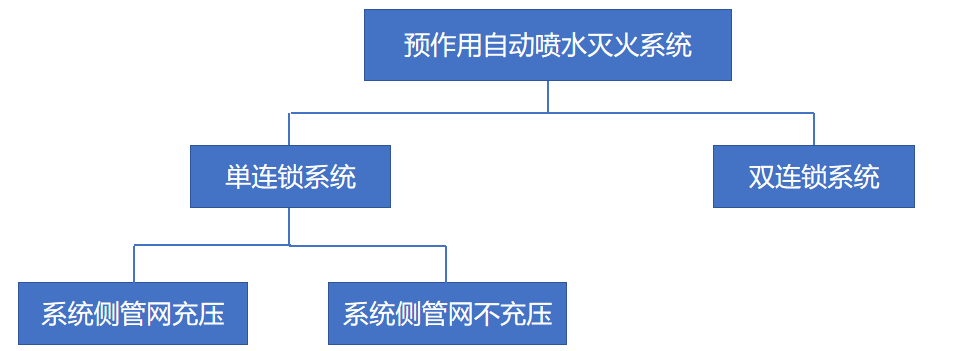
The single-chain pre-action system refers to the pre-action system that is directly controlled only by the automatic fire alarm system. In places where accidental spraying is strictly prohibited when in quasi-working state, it is advisable to use a single-chain pre-action system. The single-chain pre-action system has both the advantages of wet system and wet system, and at the same time avoids the disadvantages of wet and dry systems.
The double-interlock pre-action system refers to the pre-action system controlled by the automatic fire alarm system and the pressure switch set on the inflatable pipe. The double interlock pre-action system is controlled by the automatic fire alarm system and the pressure switch set on the inflatable pipe, which eliminates the risk of false alarm of fire and is safer than the single interlock system. However, the water spray time of the system is lagging due to the exhaust filling of water, which weakens the fire extinguishing ability of the system.
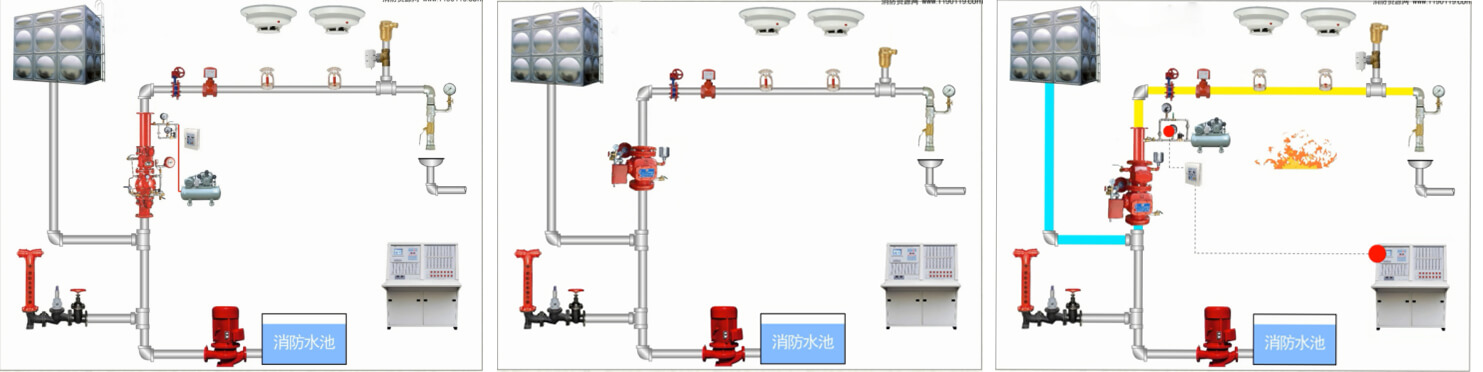
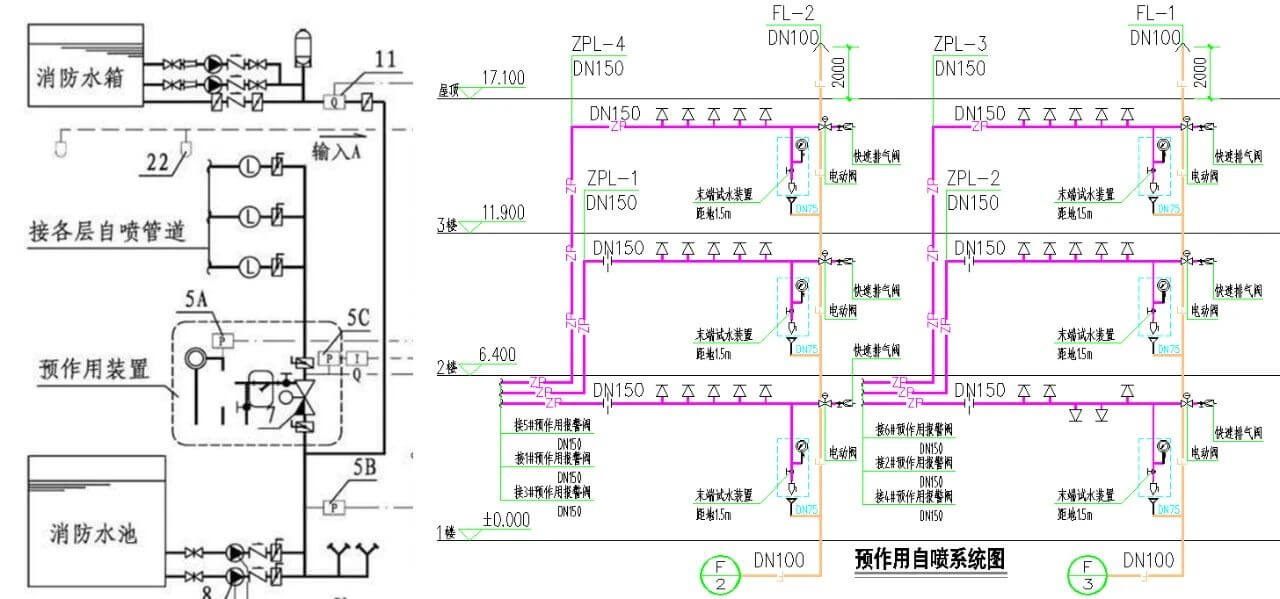
The system schematic diagram of the pre-action automatic sprinkler system and the actual project system diagram are as follows:
4.7 Water spray fire extinguishing system
Water spray fire extinguishing system refers to a fire extinguishing system composed of water source, water supply equipment, pipes, rain alarm valves (or electric control valves, pneumatic control valves), filters and water mist sprinklers, etc., to spray water mist to the protected object for fire extinguishing or protective cooling.
Article 8.3.8 of the GB50016-2014 (2018) edition of the Code for Fire Protection of Building Design stipulates that the following places should use water spray fire extinguishing systems:
1. Single capacity 40MV· A and above oil-immersed transformers of factories and mines, with a single capacity of 90MV· A and above oil-immersed transformers for power plants, with a single capacity of 125MV· A Oil-immersed transformer for independent substations and above;
2. High-voltage capacitors and multi-oil switch rooms that can be charged with fuel and installed in high-rise civil buildings.
Therefore, diesel generators and oil storage rooms in data centers need to be protected by water spray fire extinguishing systems.
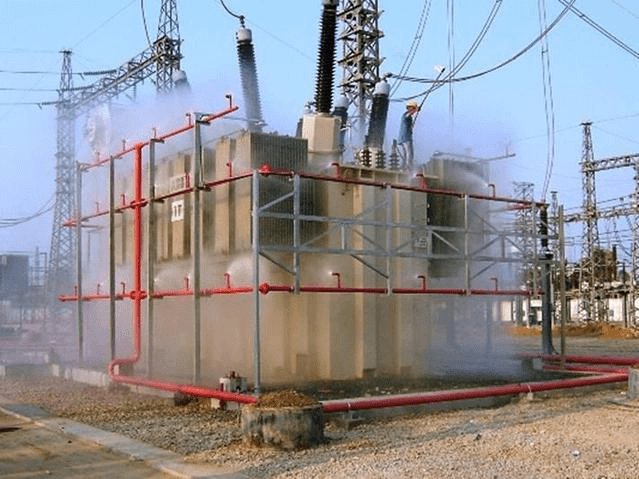
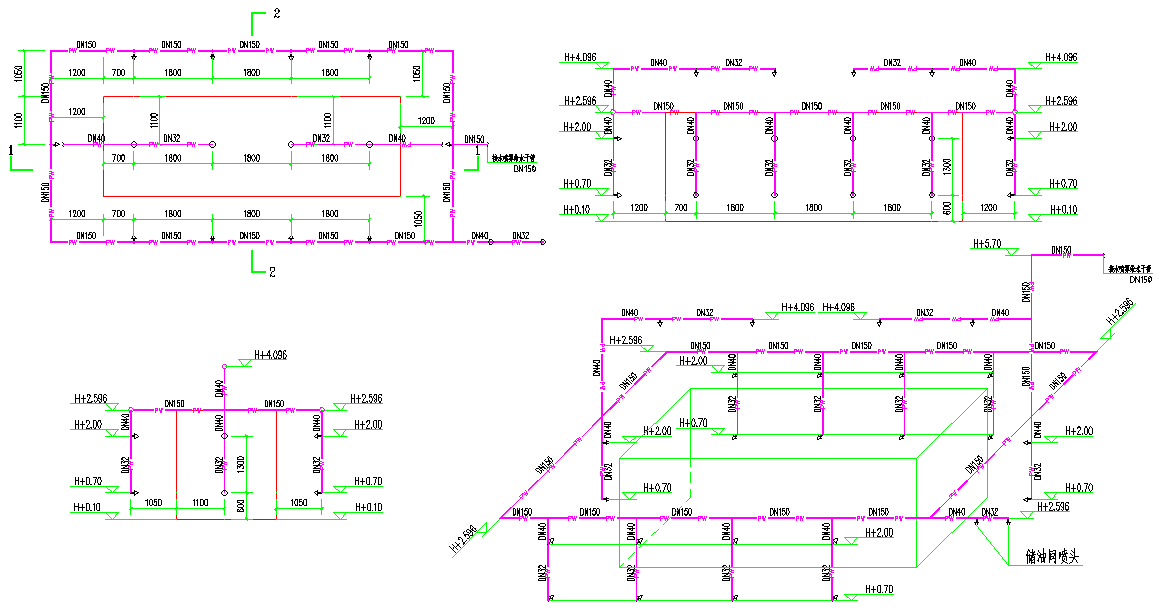
The flat layout of the water mist nozzle can be rectangular or diamond-shaped. When arranged in a rectangular shape, the distance between the water mist nozzles should not be greater than 1.4 times the radius of the bottom of the water mist nozzle; when arranged in a diamond shape, the distance between the water mist nozzles should not be greater than 1.7 times the radius of the bottom of the water mist nozzle. Examples of actual project layout of water mist nozzles are as follows:
4.8 Gas fire extinguishing system
Gas fire extinguishing system is a fire extinguishing system that uses gas as the fire extinguishing medium, mainly including heptafluoropropane and IG-541. It has the characteristics of wide range of fire extinguishing (electrical, solid, liquid and other fires), fast release speed, high fire extinguishing efficiency, basically no trace after fire extinguishing, no pollution and no damage to the protected object, etc.
Article 8.3.9, Paragraph 5 of the Building Design Fire Protection Code GB50016-2014 stipulates that a gas fire extinguishing system should be installed in the recorded magnetic (paper) media library in the main computer room and basic workshop in the computer room of the electronic information system of A and B.
Articles 13.1.2 and 13.1.3 of the Data Center Design Code GB50174-2017 stipulate that the main computer room of A, B and C data centers should be equipped with gas fire extinguishing systems.
According to the structural characteristics of the system, gas fire extinguishing systems can be divided into non-pipe network fire extinguishing systems and pipe network fire extinguishing systems.
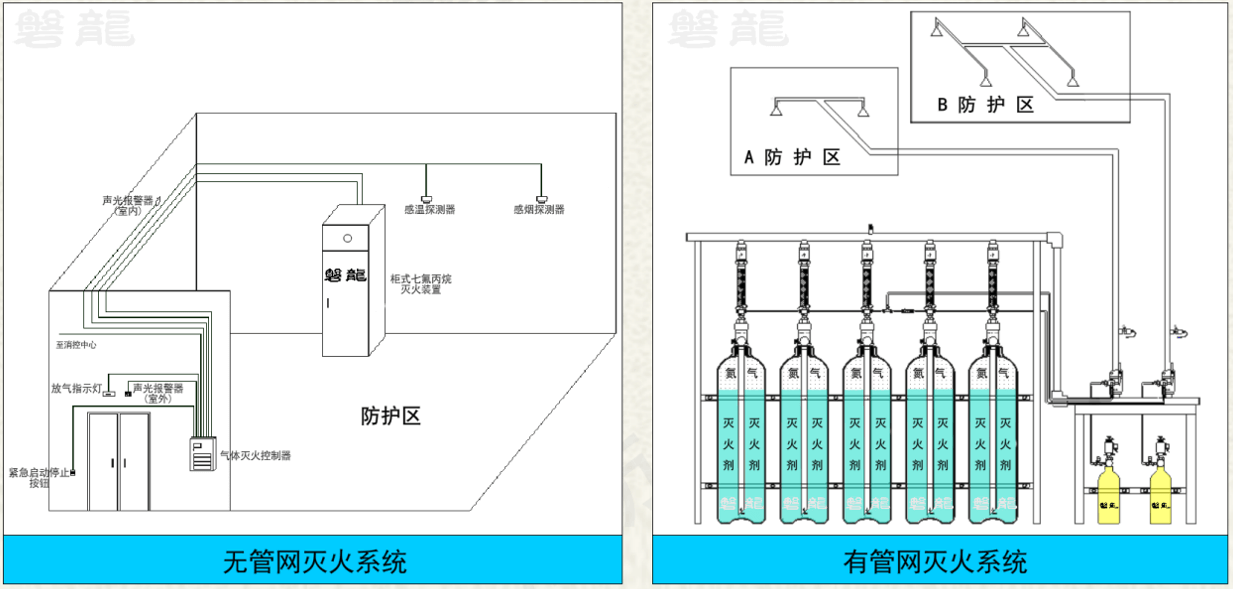
The design example of a pipe network gas fire extinguishing system is as follows:
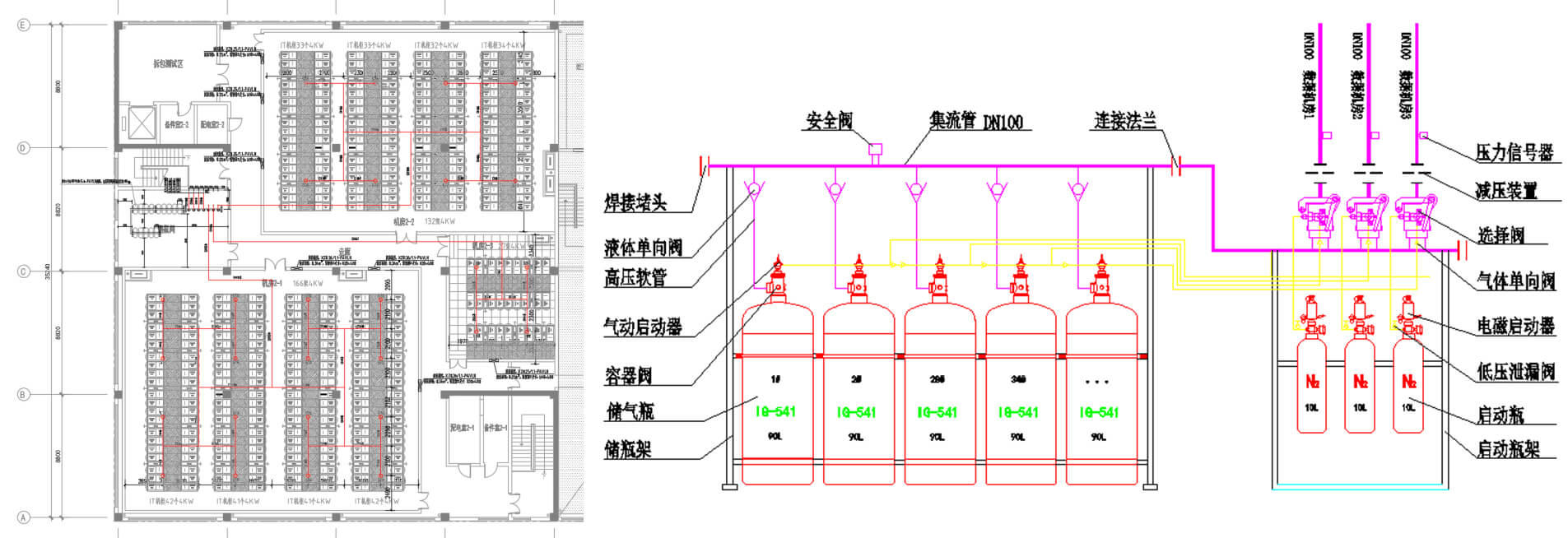
The design examples of pipeless gas fire extinguishing systems are as follows:
Some general provisions of the Design Code for Gas Fire Extinguishing Systems GB50370-2005 are as follows:
3.1.12 The protection height and protection radius of the sprinkler head shall comply with the following regulations:
(1) The maximum protection height should not be greater than 6.5m;
(2) The minimum protection height should not be less than 0.3m;
(3) When the installation height of the sprinkler head is less than 1.5m, the protection radius should not be greater than 4.5m;
(4) When the installation height of the sprinkler head is not less than 1.5m, the protection radius should not be greater than 7.5m.
3.2.4 The division of protection zones shall comply with the following provisions:
(1) The protection area should be divided into a single closed space; When the ceiling layer and the floor of the same section need to be protected at the same time, they can be combined into one protection area;
(2) When using the pipe network fire extinguishing system, the area of a protective area should not be greater than 800m², and the volume should not be greater than 3600m³;
(3) When using a prefabricated fire extinguishing system, the area of a protected area should not be greater than 500 m², and the volume should not be greater than 1600 m³.
3.2.7 The pressure relief port (lower edge) of the heptafluoropropane fire extinguishing system should be located at more than 2/3 of the clear height of the protection area.
The pipe network type heptafluoropropane gas fire extinguishing system has a short protection distance, and is often used in small protection areas, independent protection areas, and places where the distance between the cylinders and the protection area is close, and its conveying distance is 40~60m. IG541 gas fire extinguishing system has a long protection distance, often used in large-scale projects, large-scale combination distribution projects, its conveying distance is 70~90m for the primary charging system; The secondary charging system is 100~120m.
4.9 Fire extinguisher system
A fire extinguisher is a lightweight fire extinguishing tool, mainly composed of cylinders, heads, nozzles and other components, and sprays out the fire extinguishing agent with the help of driving pressure to extinguish the fire.
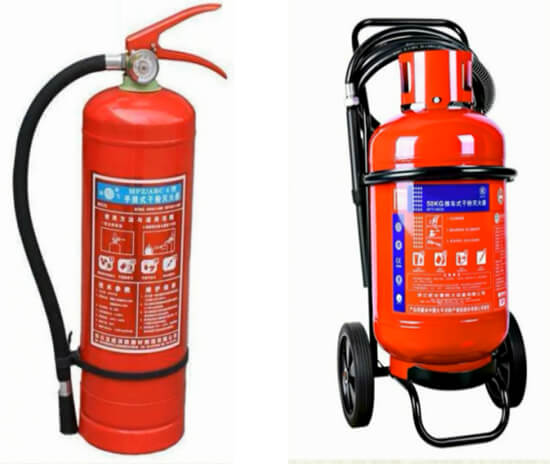
Data Center Design Code GB50174-2017, Article 13.1.6 stipulates that the data center shall be equipped with an indoor fire hydrant system and a building fire extinguisher, and the indoor fire hydrant system shall be equipped with a fire hose reel; Article 13.3.5 stipulates that the installation of building fire extinguishers in the data center shall comply with the relevant provisions GB50140 the current national standard "Building Fire Extinguisher Configuration Design Code". Fire extinguishing agents should not cause stain damage to electronic information equipment.
The maximum protection distance of fire extinguishers in the Code for the Configuration and Design of Building Fire Extinguisher GB50140-2005 is as follows:
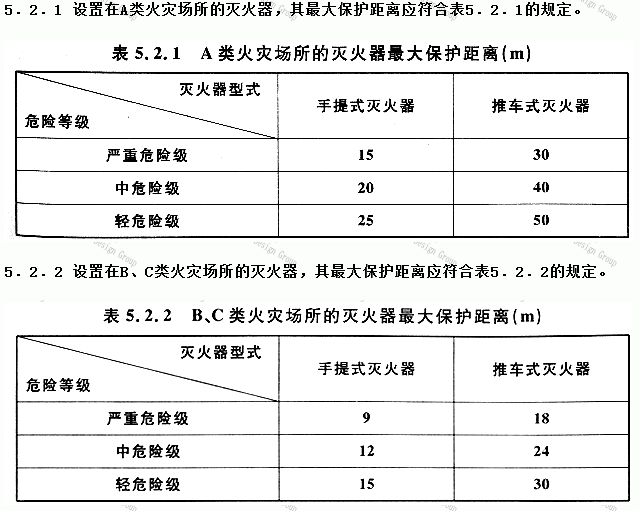
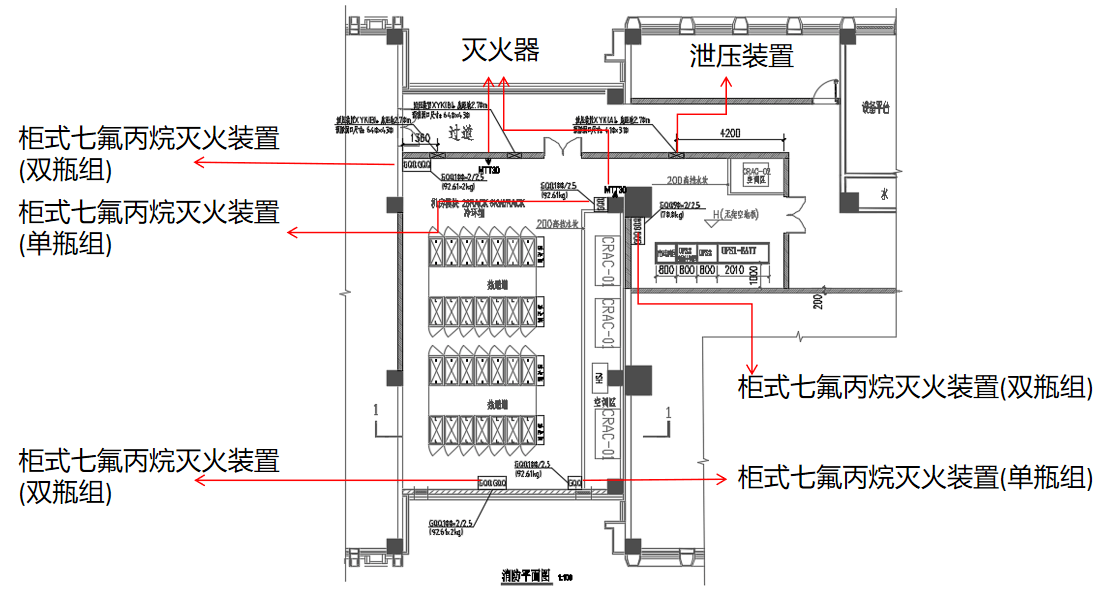
Each module of the data center is configured according to the serious risk level E fire, with a charging capacity of 30kg trolley CO₂ fire extinguisher (MTT30) and a maximum protection distance of 18 meters. The substation and distribution room is equipped with MFT/ABC20 cart-type ammonium phosphate salt dry powder fire extinguisher according to the serious danger class E fire, with a protection distance of 18 meters. In other public areas, equipment rooms, etc., 2 5kg portable ammonium phosphate salt dry powder extinguisher (MF/ABC5) are placed in each place according to the serious danger level, with a protection distance of 15m. There shall be no less than two computing units in one computing unit.
In addition to the fire extinguisher in the fire hydrant combination box, according to the maximum protection distance requirements of the fire extinguisher, fire extinguisher configuration points should be added in obvious and easily accessible places, so that there are no less than 2 fire extinguishers in each calculation unit, and all positions should be within the protection range of at least 1 fire extinguisher. and shall not affect the safety of evacuation.
The portable fire extinguisher should be set in the fire extinguisher box or on the hook or bracket, and the nameplate should face outward. The height of the top from the ground should not be greater than 1.50m, and the height of the bottom from the ground should not be less than 0.08m. The fire extinguisher box must not be locked.


