


Let's focus on lightning protection grounding knowledge.
For the grounding of the computer room, we usually refer to three specifications
Design Code for Electronic Computer Rooms (GB 50174)
"Lightning Protection Design Code for Buildings" (GB 50057)
Technical Specifications for Lightning Protection for Electronic Information Systems for Buildings (GB50343)
In this issue, we will use an example to learn more about how to do lightning protection grounding in the computer room?
1. Why do lightning protection grounding?
Computers and networks are becoming more and more integrated into people's lives and work, and they also herald the advent of the digital and information age. The widespread application of these microelectronic network equipment makes the issue of lightning protection more and more important. Due to the characteristics of high density, high speed, low voltage, and low power consumption, microelectronic devices are very sensitive to various electromagnetic interferences such as lightning overvoltage, power system operation overvoltage, electrostatic discharge, and electromagnetic radiation. If the protective measures are not effective, you may suffer heavy losses anytime and anywhere.
2. The necessity of lightning protection in the computer room
Lightning strikes can produce different forms of damage, and the International Electrotechnical Commission has called lightning disasters "a major public nuisance in the electronic age", and instantaneous overvoltages such as lightning strikes, induced lightning strikes, and power spikes have become the main culprits of damage to electronic equipment. Experts believe that lightning electromagnetic pulses (LEMPs) caused by lightning induction and lightning wave intrusion are the main causes of damage to equipment in computer rooms. The prevention principle adopted for this purpose is "overall defense, comprehensive management, and multiple protection". Strive to minimize the harm it generates.
3. Design of lightning protection grounding system in the computer room
1. Lightning protection design
The lightning protection grounding system is an important subsystem for weak current precision equipment and computer room protection, which mainly ensures the high reliability of equipment and prevents the harm of lightning. According to the relevant provisions of the GB50057 "Building Lightning Protection Design Code" and the IEC61024-1-1 standard, the lightning protection level of the central computer room should be set as a second-class standard design.
At present, the main distribution room of the building provides the first level of lightning protection according to the building lightning protection design specification, so the second and third levels of composite lightning protection are equipped in front of the mains power distribution cabinet in the center of the network of this project
The lightning protector adopts an independent module and should have a failure alarm indication, and when a module is failed by lightning, the module can be replaced separately without the need to replace the entire lightning protector
The main parameters of the second and third stage composite lightning protectors: the single-phase flow rate is: ≥40KA (8/20μs), and the response time: ≤25ns
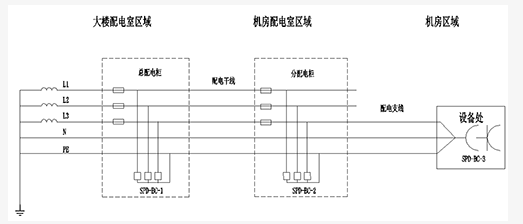
2. Grounding system design
In the national standard GB50174 "Computer Room Design Code", the computer room should have the following four places: DC of the computer system, AC work place, AC protection area and lightning protection area.
The resistance of each grounding system is as follows:
Ø The DC ground resistance of computer system equipment is not greater than 1Ω.
Ø The grounding resistance of the AC protection ground should not be greater than 4Ω;
Ø The grounding resistance of the lightning protection ground should not be greater
Ø The grounding resistance of the AC working place should not be greater than 4Ω;
1. Equipotential connection in the computer room
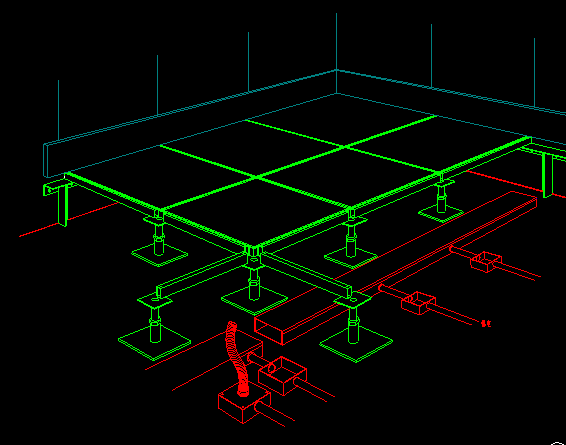
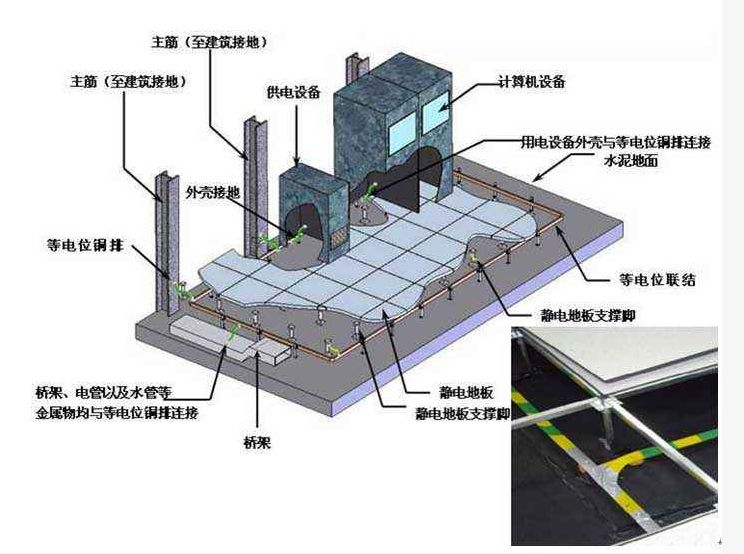
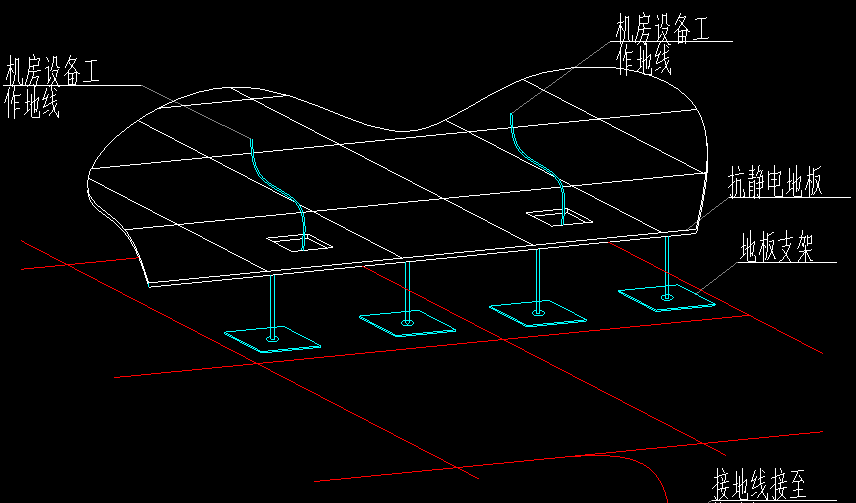
A ring grounding bus is set up in the computer room, and the equipment and casing in the computer room adopt the form of S-shaped equipotential connection, connected to the grounding bus, and laid under the movable floor support with 50*0.5 copper platinum belt, forming a 1200*1200 grid vertically and horizontally, and laying 30*3 (40*4) copper strips in the computer room around the machine, the copper strip is equipped with special grounding terminals, and all metal materials in the computer room are grounded with braided soft copper wire, and connected to the protective ground of the building.
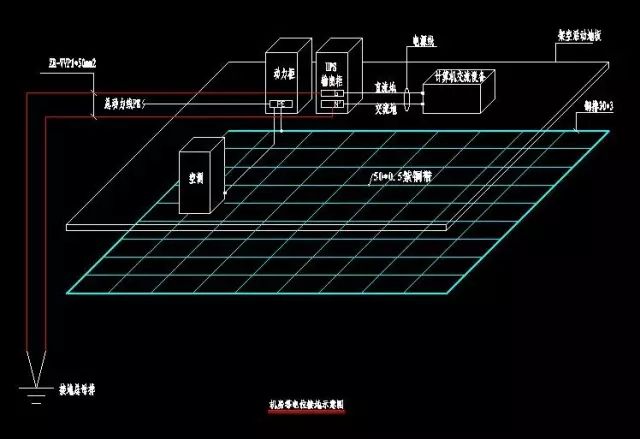
All grounding wires (including equipment, SPD, trunking, etc.) and metal trunking overlap jumper wires in the project should be short, flat and straight, and the grounding resistance is required to be less than or equal to 1 ohm.
2. Computer room shielding design
The entire computer room shield is shielded by color steel plate for hexahedral shielding, and the shield plate is seamlessly welded before, and the wall shield is grounded with the grounding bus at no less than 2 places on each side.
3. Design of grounding device in the computer room
Due to the high grounding resistance requirements of the computer room, an additional manual grounding device was added near the building, and 15 galvanized angle steels were driven into the ground mesh groove, welded with flat steel, and backfilled with drag reducers. The electrostatic grounding of the computer room is introduced by 50mm² multi-strand copper core wire through the pipe.
The grounding resistance of the grounding device is required to be less than or equal to 1 ohm.
Production method of the ground network of the computer room
1. Production of standard grounding network
At 1.5~3.0m away from the building, with the 6m*3m rectangular frame line as the center, the excavation width is 0.8m, the depth of the soil trench is 0.6~0.8m, the middle of the two long sides is penetrated, and the L5 (5*50*50) galvanized angle steel with a length of 2.5m is used, and one is driven vertically at each intersection of the bottom of the ditch, a total of 6-20 pieces, as the vertical ground pole.
Then use No. 4 (4*40) galvanized flat steel to weld and connect the six angle bars as the horizontal grounding electrode; Then use No. 4 galvanized flat steel to weld to the middle part of the ground network frame, lead it to the outer wall corner of the computer room, 0.3m above the ground, as the PE grounding end; Finally, lead the sheathed ground wire of more than 16-50 square millimeters from the grounding end, pass through the wall along the wall into the room, and connect it to the equipotential grounding collection row in the computer room.
2. Use building steel bars to make ground networks
When building or renovating a computer room, the steel bars in the concrete columns in the ground can be used as grounding devices. At least 4 main bars (diagonal or symmetrical steel bars) are selected in the column, and then welded on two copper threaded pipes above M12 protruding from the cylinder surface after oxygen welding, as the grounding end, leading to the machine room, and connecting with the equipotential grounding bus, and the equipotential grounding bar can be set under the anti-static floor.
How to do lightning protection grounding in the computer room?
The so-called grounding is to connect a metal shell in the circuit with the edge of the earth to form an electrical circuit. The purpose is to make the current flow easily into the earth and form a protection for people and equipment.
Grounding Method:
The DC ground levitation method means that the DC ground is not connected to the earth and is strictly insulated from the ground.
DC ground grounding method, the potential point of digital circuits in computers and other equipment is ground and networked.
No matter what form is adopted, there must be a grounding busbar, grounding rod, here is especially emphasized that it is recommended to use a grounded buried grounding network board, which can better guide to the earth, and the following issues should be paid attention to when grounding:
Ø Try not to short circuit or mix the DC and AC working stations in the computer room;
Ø AC lines are not allowed to be laid parallel to DC ground wires to prevent interference or short connections;
Ø The DC ground wire network should be installed under the floor to facilitate edge connection, which can reduce the grounding resistance and facilitate current discharge.
1. Grounding copper bar
The grounding of the indoor computer room adopts a 30*5 (width*thickness, unit mm) specification of copper sheet, which is 10cm high from the ground around the wall of the computer room, and is connected to the outdoor grounding body busbar. Drill small holes every 50 cm in the copper sheet to facilitate the grounding of equipment distributed in various areas of the computer room.
2. Grounding copper plate
The grounding copper plate is fixed to the floor slab with an L-shaped copper plate with a width of 60mm (thickness of 10mm), and this copper wall iron wall plate serves as the general grounding of all facilities that should be grounded to the computer room.
3. Ground network
If the computer room has a raised floor, it should be made of 2.5mm multi-core bare copper wire wrapped with raised floor columns as the ground network.
6. Examples of lightning protection and grounding projects in computer rooms
1. Project situation
A data center computer room is located on the third floor of the building, with an area of about 1,000 m².
The power distribution of this project adopts the TN-S system and independently sets the grounding wire (PE). The building joint grounding system is used and the grounding is less than 1 ohm.
The computer room is equipped with functional grounding and protective grounding, and a set of grounding devices is shared.
1. Protective grounding, lightning protection and grounding extend the grounding of the building.
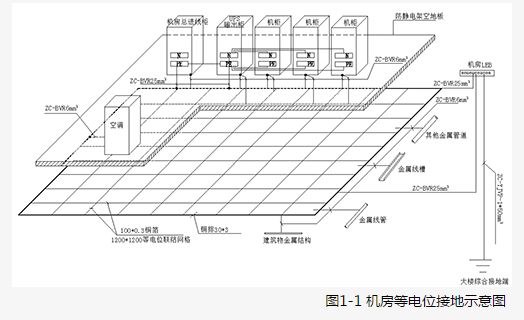
2. Make an M-grid structure equalization potential grid in the computer room. The indoor equipotential practice of the computer room is to lay an equipotential copper strip of 30×3mm² (pressure equalization ring) along the cabinet under the floor of the computer room, and the copper strip is connected to the PE row of the power distribution cabinet of each computer room with ZR-BVR6mm2, and a 100*0.3mm² copper foil equipotential grid is set. The ground wire of the power equipment in the computer room, the shell of the power equipment, the metal pipeline without electricity, the metal trunking shell, the computer equipment shell, the anti-static floor bracket, the ceiling keel, etc. must be reliably connected with the nearby equipotential copper bar network with ZR-BVR6mm2. The equipotential terminal box in the computer room is reliably connected to the comprehensive grounding terminal of the building using ZR-BVR50mm² cable. The schematic diagram of equipotential grounding in the computer room is shown in Fig. 1-1.
2. Lightning protection design ideas
A complete lightning protection scheme includes two parts: direct protection and anti-induction lightning strike, and the building where the central computer room is located has anti-direct lightning protection measures, so this plan only takes corresponding anti-induction lightning protection measures for the power distribution system of the electronic equipment in the computer room.
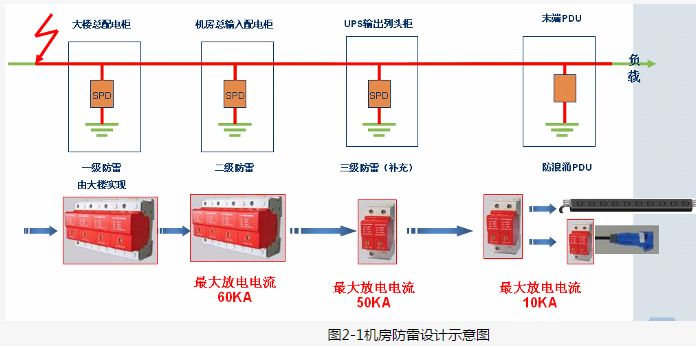
The engineering computer AC power distribution system adopts three-level lightning protection:
The first level is to install lightning protectors in the low-voltage distribution room of the building to achieve the first level of lightning protection (realized by the building).
The second stage is to install a B-level lightning protector in the UPS input distribution cabinet to achieve the second level of lightning protection.
The third level is to install a C-level lightning protector in the distribution cabinet of the UPS output train head in the computer room to achieve the third level of lightning protection.
The schematic diagram of the lightning protection design of the computer room is shown in Figure 2-1:
3. Lightning protection design ideas
Due to the many protection points and wide area of the network integration system, in order to protect the building and the electronic network equipment in all directions of the building from lightning damage or minimize the lightning damage, the design of the lightning protection scheme should be carried out from the perspective of overall lightning protection. The comprehensive lightning protection design scheme should include two aspects: direct lightning protection and induction lightning protection, and the lack of any aspect is incomplete, defective and potentially dangerous.
1. Protection against direct lightning
If there is no direct lightning protection, according to the IEC1312 estimate, almost all lightning currents flow into the equipment through conductor lines (such as power lines, signal lines, etc.) in and out of the building, such damage is very serious, so direct lightning protection is the prerequisite for inductive lightning protection; Direct lightning protection is designed and constructed in accordance with the national standard GB50057 "Building Lightning Protection Design Code", mainly using lightning rods, nets, wires, belts and good grounding systems, the purpose of which is to protect the exterior of the building from lightning damage and provide a relatively safe environment for people or equipment in the building.
2. Protection of power supply system
Statistics show that more than 80% of lightning accidents in microelectronic network systems are caused by lightning impact overvoltage induced on the power supply line connected to the system. Therefore, the protection of the power cord is a part that cannot be ignored in the overall lightning protection.
3. Protection of signal system
Although lightning protection devices are installed on external inlet lines such as power and communication lines, lightning strikes that occur on network cables (such as twisted pairs) and induce overvoltages will still affect the normal operation of the network and even completely damage the network system. When lightning strikes, a huge transient magnetic field is generated, and metal lines within 1 kilometer, such as network metal connections, will be inducted by extremely strong inductive lightning strikes.
In addition, when the power line or communication line transmits the lightning strike voltage, or when the ground wire system of the building discharges lightning strikes, the powerful transient current generated is enough to destroy the network at one time for the network transmission line. Even if it is not a particularly high overvoltage, it cannot destroy the equipment at once, but every overvoltage shock accelerates the aging of network equipment, affects data transmission and storage, and even crashes until it is completely damaged. Therefore, the lightning protection of network signal lines is a very important link for the overall lightning protection of the network integrated system.
4. Equipotential connection
The central computer room where the backbone switch of the integrated network system is located should be equipped with a pressure equalization ring to electrically connect all metal objects in the computer room, including cable shields, metal pipes, metal doors and windows, equipment shells, and all metal pipes entering and exiting the building, and connect them to the pressure equalization ring to equalize the potential.
5. Grounding
The use of joint grounding in the computer room can effectively solve the impact of the increase in ground potential, and a qualified ground network is the key to effective lightning protection. The joint ground network of the computer room is usually composed of the foundation of the computer room building (including ground piles), the ring grounding (body) device, and the working (power transformer) ground network. For the lightning protection of sensitive data communication equipment, the good or not of the grounding system is directly related to the effect and quality of lightning protection. If the ground network does not meet the requirements, the ground network conditions should be improved, the area of the ground network should be appropriately expanded and the structure of the ground network should be improved, so that the lightning current can be discharged as soon as possible, and the holding time of high overvoltage caused by lightning current should be shortened to meet the requirements of lightning protection.
4. Power supply lightning protection
The lightning protection of the power supply system adopts the method of three-level lightning protection. The lightning protection of the distribution box of the computer room should be no less than the second level protection (fine protection), not only at the input of the main distribution box of the computer room, but also the installation of a secondary lightning protector at the input of the main distribution box of the computer room, and the installation of a third-level lightning protector at each end of the output of the distribution box in the computer room. That is, the secondary lightning protector is installed at the front end of the main switch in the distribution cabinet, which not only saves space, but also plays a role in beauty and easy maintenance, and installs a third-level lightning protector at the front end of the main switch of the mains power distribution cabinet and UPS distribution cabinet respectively to protect the equipment in the computer room.
5. Grounding system
There are four grounding forms in this computer room, namely: computer dedicated DC logic ground, AC working ground, safety protection ground, and lightning protection ground.
1. Computer room grounding system
Install a copper grid under the movable floor of the computer room, and connect all the computer systems of the computer room to the copper grid and introduce them into the earth. The grounding system of the computer room adopts a special grounding system, which is provided by the building, and the grounding resistance is ≤ 1Ω.
2. Specific methods of equipotential grounding in the computer room:
Use 3mm×30mm copper strips to cross into squares under the movable floor of the machine room, and the intersections are arranged in a staggered manner with the position of the movable floor support, crimped together at the intersections, and fixed with pad insulators under the copper belt. At a distance of 400mm from the wall of the computer room, 3mm×30mm copper strips are used along the wall to create an M-shaped or S-shaped ground network, and the connection position between the copper strips is crimped with a 10mm female and then brased welded, and the joint grounding body of the building is connected through the 35mm2 copper cable down conductor, so as to form a Faraday cage grounding system and ensure that the grounding resistance is not greater than 1Ω.
Equipotential connection of the computer room: the ceiling keel, wall keel, movable floor support, non-computer system pipes, metal doors, windows, etc. are all equipotential connections, and multiple points are connected to the grounding copper strip network of the computer room through the ground wire of 16 m m2.
3. Exchange work place
The grounding required for operation in the power system (neutral point grounding of the distribution cabinet) should not be greater than 4 ohms. The neutral wire connected to the neutral point directly grounded by the transformer or generator is called the neutral wire; Make an electrical connection with the ground again at one or more points on the neutral wire, called repeated grounding. The exchange work place is the neutral point and is reliably grounded. When the neutral point is not grounded, if one phase touches the ground and the person touches the other phase, the contact voltage received by the human body will exceed the phase voltage, and when the neutral point is grounded, and the grounding resistance of the neutral point is very small, the voltage received by the human body is equivalent to the phase voltage; At the same time, if the neutral point is not grounded, the grounding current is very small because the stray resistance of the neutral point to the ground is very large; The corresponding protection equipment cannot quickly cut off the power supply, causing harm to people and equipment; The opposite is true.
4. Safety protection area
The safety protection ground refers to the shell of all machinery and equipment in the computer room, as well as the body (shell) of auxiliary equipment such as electric motors and air conditioners, and the ground, which should not be greater than 4 ohms. When the insulators of various electrical equipment in the computer room are damaged, it will pose a threat to the safety of the equipment and operation and maintenance personnel. Therefore, the outer shell of the equipment should be reliably grounded.
5. Lightning protection area
That is, the grounding of the lightning protection system in the computer room is generally buried underground with horizontal wires and vertical ground piles, mainly to direct the lightning current from the lightning device to the grounding device, which should not be greater than 10 ohms.
The lightning protection device can be divided into three basic parts: the lightning terminator, the down conductor and the grounding device, which is the metal conductor that receives the lightning current. This scheme only connects the down conductor of the lightning arrester with the grounding copper bar in the power distribution cabinet. Ground resistance ≤ 4Ω is required.
6. Lightning protection design scheme
1. Protection against direct lightning
The building where the computer room is located already has external lightning protection facilities such as lightning rods and lightning protection belts, and no longer uses external lightning protection supplementary design. If there is no direct lightning protection before, it is necessary to make a lightning protection belt or lightning protection net on the top floor of the computer room, if the computer room is in an open area, lightning rods need to be installed according to the situation, and the lightning rods and lightning protection belts must be done as a down-conductor and connected to the ground network.
2. Lightning protection of the power supply system
(1) For the power line protection of the network integration system, firstly, the power supply inlet line entering the main distribution room of the system should be laid with metal armored cables, and both ends of the cable armor layer should be well grounded; If the cable does not have an armor layer, the cable is buried through the steel pipe, and both ends of the steel pipe are grounded, and the length of the buried should not be less than 15 meters. The power lines from the main distribution room to the distribution boxes of each building and the distribution boxes on the floor of the computer room should be laid with metal armored cables. This greatly reduces the possibility of the power cord inducing overvoltage.
(2) Installing a power supply lightning protector on the power supply line is an essential protective measure. According to the requirements of the IEC lightning protection code regarding lightning protection zones, the power supply system is divided into three levels of protection.
(1) A first-class power supply lightning protection box with a circulation capacity of 80KA~100KA can be installed on the low voltage side of the distribution transformer in the main distribution room of the system.
(2) Install a secondary power supply lightning protection box with a current capacity of 60KA~80KA in the main distribution box of each building;
(3) Install a three-level power supply lightning protector with a current capacity of 20~40KA at the power supply inlet of important equipment in the computer room (such as switches, servers, UPS, etc.);
(4) Use socket-type lightning protectors at the power supply of hard disk recorders and video wall equipment in the control center of the computer room.
All lightning protectors should be well grounded. When choosing a lightning protector, pay attention to the form of the interface and the reliability of grounding, and set up a special grounding wire in important places.
3. Lightning protection of the signaling system
(1) Network transmission lines mainly use optical fiber and twisted pair cables. Among them, the optical fiber does not require special lightning protection measures, but if the outdoor optical fiber is overhead, then the metal part of the optical fiber needs to be grounded. The shielding effect of twisted pair wire is poor, so the possibility of inducing lightning strike is relatively high, and such signal wires should be laid in the shielding trunking, and the shielding trunking should be well grounded; It can also be laid through metal pipes, and the metal pipes should be electrically connected throughout the line, and both ends of the metal pipes should be well grounded.
(2) Installing signal lightning protectors on the signal line is an effective method for preventing inductive lightning. For network integration systems, special signal surge protectors can be installed before the network signal line enters the WAN router; Install signal lightning protectors (such as RJ45-E100) with RJ45 interface at the signal line entrances of the system backbone switch, the main server, and each sub-switch and server. The selection of signal lightning protectors should comprehensively consider the working voltage, transmission rate, interface form, etc. The surge arrester is mainly connected in series to the interfaces of equipment at both ends of the line.
(1) Install a single-port RJ45 port signal arrester at the server input port to protect the server.
(2) The 24-port network switch is connected to the 24-port RJ45 port signal arrester in series to avoid damage to the equipment due to lightning induction or electromagnetic field interference along the twisted pair cable.
(3) Install a single-port RJ11 port signal arrester on the DDN private line receiving device to protect the equipment on the DDN private line.
(4) Install a coaxial port sky feeder arrester at the front end of the satellite receiving equipment to protect the receiving equipment.
(3) Lightning protection for the monitoring system room
(1) Install a video signal lightning protection device at the outlet end of the video video recorder or use a rack-mounted video signal lightning protection box, with 12 ports of full protection, which is easy to install.
(2) A control signal surge protector (DB-RS485/422) is installed at the control line entry end of the matrix and video splitter.
(3) The telephone line in the computer room adopts an audio signal lightning protector, which is connected in series at the telephone line at the front end of the telephone, which is convenient to install and easy to maintain.
(4) A control signal lightning protector is installed at the signal line access at the front end of the alarm to effectively protect the alarm signal line.
Note: All lightning protection devices should be well grounded, and the selection of lightning protectors should pay attention to the form of the interface and the reliability of grounding.
4. Equipotential connection of the computer room
Under the anti-static floor of the computer room, 40*3 copper bars are arranged along the ground to form a closed ring grounding busbar. The metal shell of the distribution box, the power supply ground, the lightning arrester ground, the cabinet shell, the metal shield trunking, doors and windows, and the metal parts and system equipment shells that pass through the junction of each lightning protection area, as well as the isolation frame under the anti-static floor, are grounded at multiple points and equipotential into the bus. And the wire clamp fastened by the bolt of the equipotential connection wire 4-10mm2 copper core wire is used as the connecting material. At the same time, the main steel bar of the building was found in the machine room, and it was tested to be well connected with the lightning protection belt, and the grounding busbar was connected with it through the copper-iron conversion joint with 14mm galvanized round bar. Forms an equipotential. The purpose of using a joint grounding network is to eliminate the potential difference between various networks and ensure that the equipment is not damaged by the counterattack of lightning.
5. Grounding network production and design
Grounding is one of the very important links of lightning protection technology, whether it is direct lightning or induction lightning, it is ultimately the introduction of lightning current into the earth. Therefore, for sensitive data (signal) communication equipment, there is no reasonable and good grounding system to reliably protect lightning. Therefore, the ground network of the building with a grounding resistance of >1Ω needs to be rectified according to the requirements of the specification to improve the reliability of the grounding system in the computer room. According to the specific situation, the effective area of the grounding network and the structure of the ground network should be improved by establishing different forms of grounding networks (including horizontal grounding bodies and vertical ground bodies) along the computer room building.
When using a common grounding device, the value of the common grounding resistance should not be greater than 1Ω;
When using a special grounding device, its grounding resistance value should not be greater than 4Ω.
The basic requirements are as follows:
1) Make a grounding network around the building, using less materials and lower installation costs to complete the most effective grounding device;
2) The grounding resistance value is required to be R ≤1Ω;
3) The grounding body should be set about 3~5m away from the main building where the computer room is located;
4) The horizontal and vertical ground body should be buried in the ground by about 0.8m, the vertical ground body should be 2.5m long, and a vertical ground body should be set every 3~5m, and the vertical ground body should be made of 50×50×5mm hot-dip galvanized angle steel, and the horizontal ground body should be 50×5mm hot-dip galvanized flat steel;
5) When welding on the ground network, the welding area should be ≥ 6 times the contact point, and the welding joint should be treated with anti-corrosion and anti-rust;
6) The local network should be welded with multiple building column steel bars 0.6~0.8m below the ground, and treated with anti-corrosion and anti-rust;
7) When the soil conductivity is poor, the method of laying resistance reducer is used to make the grounding resistance ≤1Ω;
8) The backfill soil must be new clay with good conductivity;
9) Multi-point welding with the foundation ground network of the building, and reserve a grounding test point.
The above is a traditional cheap and practical grounding method, according to the actual situation, the grounding network material can also choose new technology grounding devices, such as maintenance-free electrolytic ion grounding system, low-resistance grounding module, long-lasting copper-clad steel grounding rod and so on.
5. Precautions for lightning protection and grounding in the computer room
1. Considering the interference of lightning or other telecommunications equipment, the computer room should not be set up on the top floor of the building or next to the outer wall. For particularly important computer systems, consider setting up a separate shielded computer room. The grounding installation of equipment and pipelines in buildings (including computer rooms) should be carried out in accordance with relevant specifications, and equipotential connections should be done.
2. To prevent lightning hazards, electromagnetic pulses caused by lightning strikes should also be prevented, and SPD (anti-electromagnetic surge) protection devices should be set up in the distribution box of the computer room to prevent power outages caused by lightning electromagnetic pulses. In addition, for important system hosts, the communication cable should also be equipped with SPD protection device, because the number of communication cables is generally relatively large, so the protection setting of the communication line should be set reasonably according to the specific actual situation;
3. The electrical grounding system should adopt the TN-S grounding system, the PE wire and the phase wire should be separated, and the power supply access point of the computer room should be repeatedly grounded;
4. The grounding of the computer room is generally divided into AC working grounding, DC working grounding, safety working grounding, and lightning protection grounding. According to the requirements of the "Building Lightning Protection Design Code", when the lightning protection design adopts a shared grounding system, each grounding system should share a set of grounding devices. All exposed conductive materials (metal components such as cabinets, shells, racks, etc.) of the information system should establish a first-potential connection network.
Therefore, the electrical lightning protection design should be equipped with a special equipotential connection row in the computer room, which is connected to the building total equipotential connection row through the down conductor. According to the principle of layered equipotential of the common grounding system, the main steel bar of the structure is used as the down conductor, which is more suitable for the common grounding system. It is also emphasized that the grounding resistance of the building's grounding system should not be greater than 1Ω.


