


As the infrastructure of information systems, the usability, reliability and serviceability of data centers have gradually attracted attention, and their sustainable development has become an important determinant of the continuous operation of government agencies and enterprises. In order to adapt to the future development of government agencies and enterprise organizations, it is particularly important whether the data center has sustainable development capabilities. The sustainable development of systems must be fully considered in the design and implementation of systems.
2.3.1. Factors affecting the sustainable development of data centers
At present, data centers that lack sustainable development capabilities have exposed many problems, such as insufficient power supply capacity, inability to achieve online expansion, poor return air supply in the computer room, local hot spots, and huge energy consumption in data centers. These issues directly affect the availability and reliability of data centers, greatly shortening the normal life cycle of data centers.
To avoid repeating the same mistakes, we must understand what factors affect the sustainability capabilities of data centers. Through the survey of large domestic enterprise data centers, it is found that there are generally insufficient sustainable development capabilities, mainly in the following aspects:
(1) Inadequate initial resource planning and lack of operational sustainability resource planning considerations.
(2) The data center computer room is poorly functional, lacks overall planning, and the planning layout is unreasonable.
(3) The building floor height is too low and the structural bearing capacity is insufficient, which seriously restricts the use of space.
(4) The power supply design density is low, the system reliability is poor, and the capacity cannot be expanded online.
(5) The system design lacks economic considerations, and the daily operation energy consumption is high and the operating cost is high.
(6) O&M management lacks long-term, stability, and adaptability considerations, and is prone to management chaos.
It can be seen that there are many factors that affect the sustainable development ability of data centers, involving all aspects of data center construction projects. These factors are summarized in six aspects: compliance, availability, reliability, functionality, economy and serviceability. Therefore, the study of data center sustainability capabilities must start from the above factors and start from the entire life cycle. The stages of the life cycle are an organic whole, and any failure at any stage or link will lead to a loss of sustainability in the data center.
2.3.2. Data center sustainability evaluation
The concept and six influencing factors of data center sustainability capability are described earlier. This section will combine these factors to comprehensively evaluate what kind of data center is sustainable from a macro perspective.
1. Data center compliance evaluation
Data center compliance means that the planning, design and construction of data centers must comply with relevant national industrial policies; Comply with current national, industry and local standards and norms; Comply with the planning requirements of local government agencies.
On the surface, there may seem to be no direct relationship between data center compliance and sustainability, but on the contrary, it is the primary factor in evaluating whether a data center is sustainable. Norms are the standards of behavior established for relevant groups; Standards are uniform regulations for repetitive things and concepts. It is produced through a series of strict procedures such as consensus among experts and scholars in relevant parties, synthesizing relevant science, technology and practical experience, and being approved by the competent authority and released in a specific form. Therefore, non-compliance with data center construction and operation and maintenance will lead to the security of the data center being threatened. For commercial data centers, it will also affect customer confidence in the data center and the sustainable development of the business.
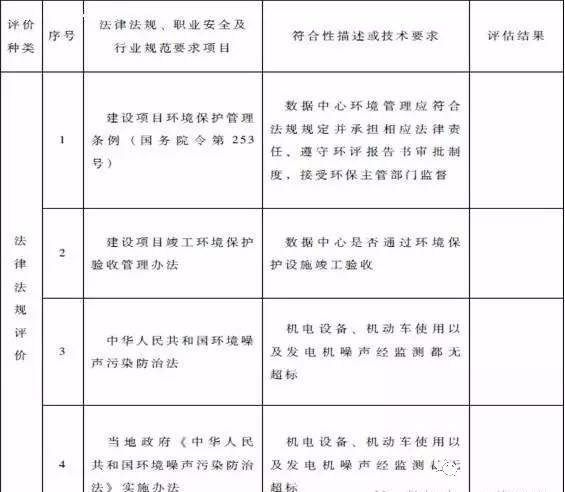
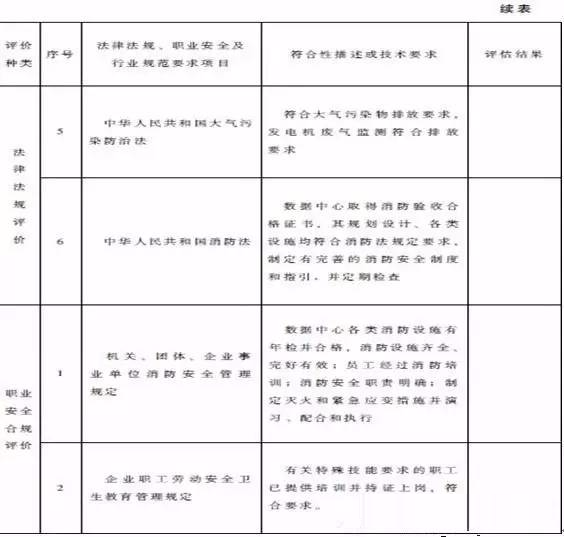
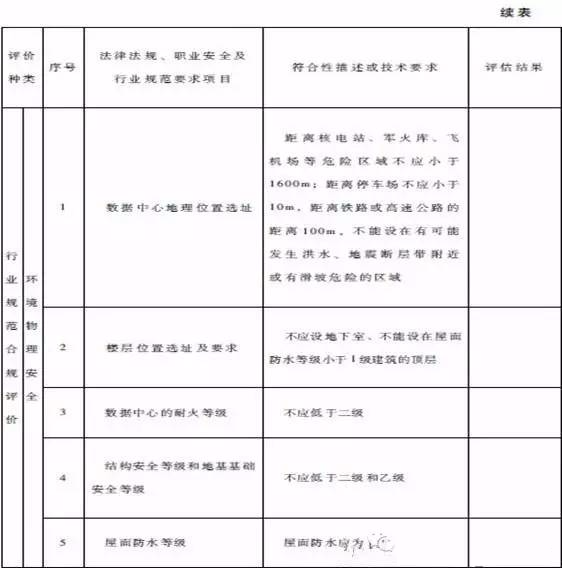
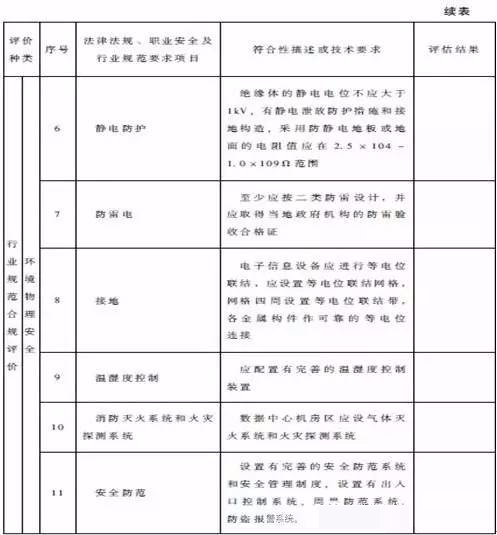
Data center compliance is broad and complex. How should a data center be reasonably evaluated for compliance? The compliance of data centers is mainly evaluated from three aspects: laws and regulations, occupational safety and industry norms, while the compliance of industry norms is mainly carried out from two aspects: equipment physical safety requirements and environmental physical safety requirements. Table 2-3 summarizes the key points of compliance inspection and evaluation of data centers with a wide range of applications and the largest number of users, based on ensuring the safe and reliable operation of data centers and the economics of data center operation and maintenance, based on ensuring the safe and reliable operation of data centers.
Table 2-3 Data center compliance evaluation table
2. Functional evaluation of data centers
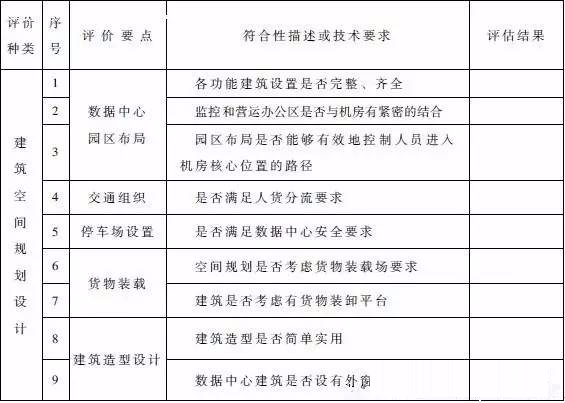
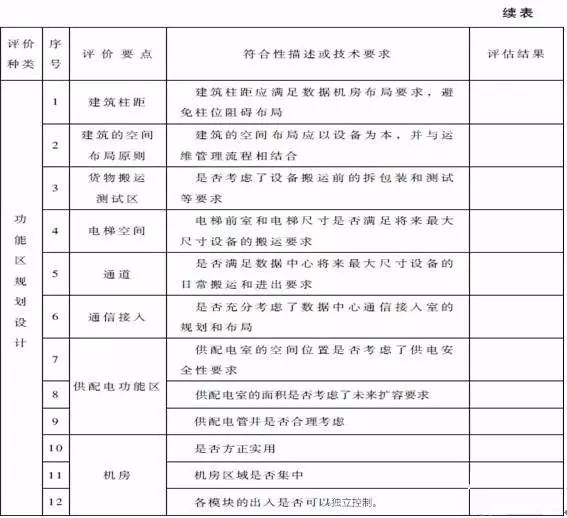
The functionality of a data center refers to some important features required to meet the normal operation and service processes of a data center. The function of the data center is to provide a service support platform for the reliable operation of IT systems and provide a safe and reliable operating environment for IT equipment. If we talk about the sustainability of data centers without the functional requirements of data centers, it can only be empty words.
A well-functioning data center should fully analyze and consider its functionality in the planning and design stage. Architectural space planning and design and functional area planning and design are the core of data center functional evaluation. It can also be said that the functional evaluation of data centers mainly evaluates whether their architectural space planning and design and functional area planning and design meet the requirements of use functions and service processes, see Table 2-4.
Table 2-4 Data center functional evaluation table
3. Data center availability evaluation
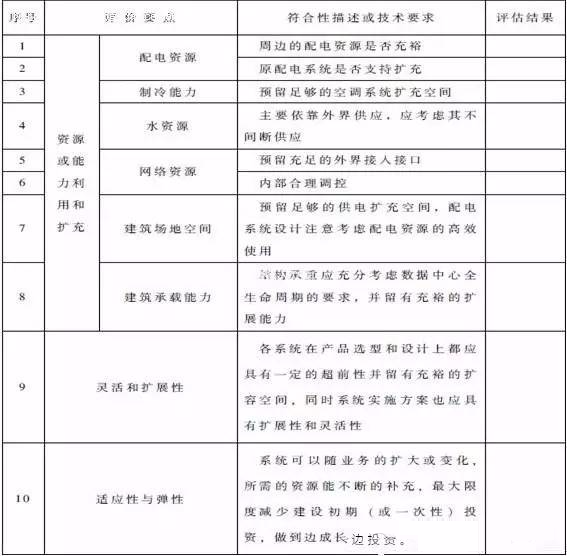
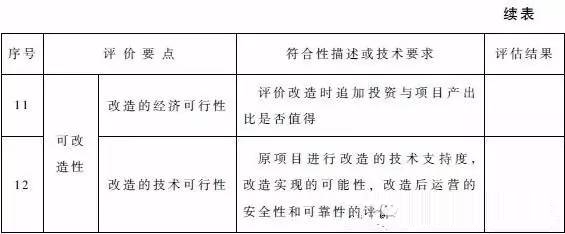
The availability of a data center refers to the fact that the data center maintains business continuity and has high flexibility during its entire life cycle and under the premise that external resources can be fully met, to meet the requirements of on-demand construction, later upgrade and expansion. In the case of limited external resources, it can achieve rational use of resources and ensure that the reliability and maintainability of the data center are not affected. So how should you evaluate the availability of a data center? It is mainly considered from the following aspects, see Table 2-5.
Table 2-5 Data center availability evaluation table
1) Utilization and expansion of data center resources or capabilities
Data centers are inseparable from resources or capabilities at all stages of the life cycle, and the continuous availability of various resources or capabilities, as well as the rationality of resource utilization, will be directly related to the availability of data centers. These resources or capabilities mainly include power distribution resources, cooling capacity, water resources, communication network resources, building site space, building carrying capacity, etc. Therefore, evaluating the availability of a data center must first evaluate the resources or capabilities it requires. In addition to relying on the continuous supply guarantee of external resources, the availability of resources is more important how to make reasonable use of resources, and the rational use of resources will greatly improve the availability of resources, thereby ensuring the availability of data centers. From this perspective, the flexibility, scalability, adaptability, high elasticity and transformation of data centers can be called intangible resources of data centers. Therefore, these intangible resources are also important factors in evaluating the availability of a data center.
2) Flexibility and scalability
No one wants to see their data center run low on power or production capacity. Therefore, to meet the demands of the dynamic business in the future, CIOs must forecast power and cooling needs in 5 or 10 years from now during the planning and design phase. Each system should have a certain degree of advancement in product selection and design, and leave sufficient room for expansion, and the system implementation plan should also be scalable and flexible. Ensuring design flexibility and ease of upgrade is critical to the sustainability of data centers.
3) Adaptability and elasticity
In the construction of high-availability data centers, it is also necessary to pay attention to the adaptability and elasticity of the system, that is, each system of the data center should first meet the general business needs, and at the same time, with the expansion or change of the business, the required resources can be continuously replenished, minimize the initial (or one-time) investment in construction, so as to invest while growing, reduce capital costs, and improve the efficiency of capital use. It also reduces the risk of decision failure in one-time investments. For example, data centers need to consider redundancy levels, power density, and other requirements to meet the needs of different business purposes.
4) Future retrofit
With the development of IT technology, the life cycle of data centers will gradually shorten due to its impact. If the data center has a certain degree of transformation and can adapt to the development of IT technology, the life cycle of the data center can be extended and the sustainable development of the data center can be realized. The transformation evaluation of data centers can be carried out from the following two aspects:
(1) The economic feasibility of renovation refers to the cost-benefit analysis of additional investment in the renovation process, that is, the ratio of additional investment to project output during renovation, and this is used as one of the basis for decision-making. The transformation and reapplication of data centers is also an effective measure to extend the life cycle of data centers, improve resource utilization, and reduce costs. To improve the sustainability of data centers, it is necessary to reduce the cost of retrofitting and make it more economically viable.
(2) The technical feasibility of the transformation refers to the technical support for the transformation of the original project, the possibility of realizing the transformation, and the safety and reliability evaluation of the operation after the transformation. The technical feasibility of transformation complements the technological advancement. Only by adopting advanced technologies that can support future transformations can we truly extend the life cycle of the data center and create conditions for sustainable development.
4. Reliability evaluation of data centers
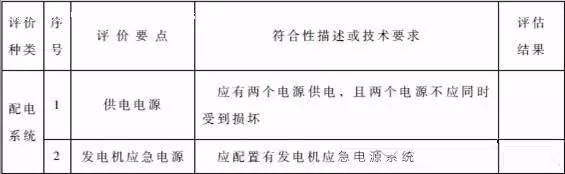
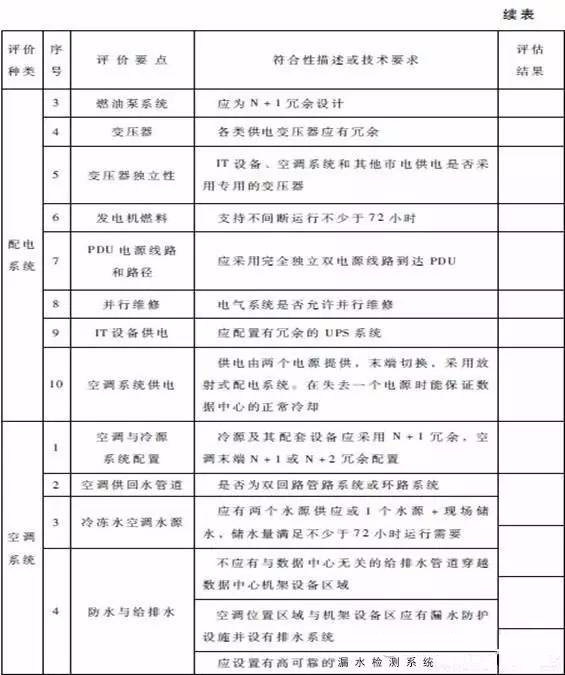
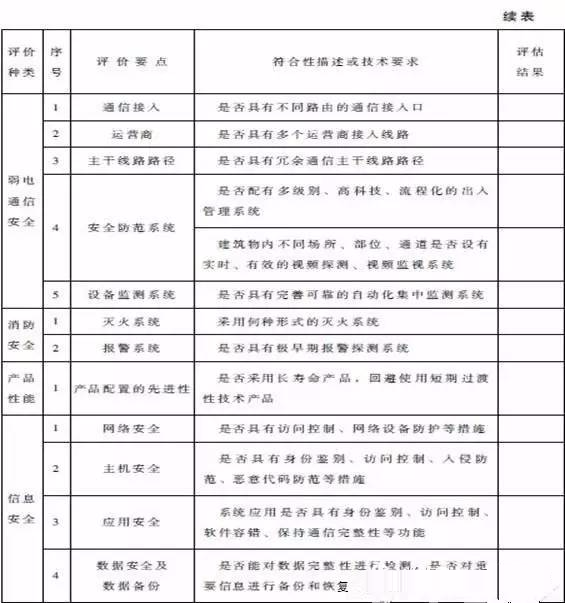
Reliability is commonly referred to as the ability to complete a specified function under specified environmental conditions and within a specified time. Data center reliability depends on the failure-free operating time of the infrastructure. The longer the trouble-free operation time, the higher the reliability. High-reliability design is an integral part of the sustainable development of data centers. To ensure that data centers can provide continuous service to customers, they must also be highly reliable. The high reliability of a data center must also be evaluated from the aspects of power supply, air conditioning, weak current communication safety, fire safety, and infrastructure product performance after meeting the compliance evaluation (see Table 2-6).
Table 2-6 Data center reliability evaluation table
5. Evaluation of the economic feasibility of the data center
The economy of a data center refers to obtaining the greatest economic benefits with the lowest operation and maintenance costs under the premise of ensuring functionality, availability and reliability. Economic evaluation mainly evaluates the economic benefits of the data center life cycle, that is, the evaluation of input and output in the data center life cycle. The sustainable development of data centers pursues the best economic benefits throughout the life cycle, so that the ratio of input and output in the whole process of data center design, construction and operation is optimized. Obviously, the most important thing to improve the economy of the data center is to reduce the TCO of the data center, that is, to reduce the construction investment cost of the data center and reduce the later operating cost. In data center TCO, operating costs account for a much larger proportion than construction costs. If the operational investment is too high, it can make ends meet in the data center, ultimately leading to investment failure.
In order to reduce the construction cost of data centers, it is necessary to conduct repeated research and demonstration in various aspects in the process of system design, equipment configuration and material selection in line with the principles of economy, practicality and reasonableness, so that each system has a good cost performance while ensuring reliability and advancement. On the other hand, with the continuous improvement of power supply density, the energy consumption expenditure of data centers accounts for an increasing proportion of operating costs. Therefore, the most important link in reducing data center operating costs is to reduce energy consumption expenses; The second is to improve the level of facility monitoring, improve the quality and efficiency of maintenance management, and save maintenance costs and personnel costs. Therefore, it is very important to evaluate the efficiency of energy utilization and whether there are reasonable energy-saving measures.
Based on the above analysis, TCO and power use effectiveness (PUE) are the main indicators for evaluating the economy of data centers.
6. Data center serviceability evaluation
The serviceability of a data center refers to the ability to provide diversified, efficient, professional and sustainable services. It is mainly reflected in three aspects: maintainability, service controllability and operational service capabilities.
(1) Maintainability is a measure of the ease of repair and maintenance during operation. The maintainability of data centers is the prerequisite and guarantee of sustainable development. After the data center is put into normal operation, it begins to enter the system operation and system maintenance stage. The purpose of system maintenance is to ensure that the data center is running normally and reliably, and that the system can be continuously improved. System maintenance refers to the planned and organized implementation of necessary changes to the system to ensure that the elements of the system are always in the latest and correct working state with the changes in the environment. The main factors affecting maintainability are: understandability, predictability, and modifiability of data center critical infrastructure and systems. These three factors are closely related, and only with a correct understanding of each system can appropriate modifications be made; Only with accurate and foreseeable goals can the correctness of the modification be guaranteed. Improving the maintainability of the data center starts from the initial requirements analysis and design, and ends with the whole process of construction and implementation. If it enters the maintenance stage and then evaluates and pays attention, it will be too late.
(2) Service controllability means that users have the right to decide on the type of business and service content of the services provided by the data center, and have the ability to continuously modify and improve the service implementation process and quality. The purpose of studying service controllability is to scientifically formulate service projects, rationally commit service quality, and improve the management ability of data center service system.


