


- Energy-saving renovation requirements and schemes for communication buildings
1. The need for energy-saving renovation of communication buildings
The development and construction of data centers are closely related to relevant policies. Since 2020, national policies have become more and more demanding on data centers, and the data center industry has entered a period of high-quality transformation, and is developing in the direction of "intensification", "greening" and "service computing power". Specifically, under the influence of "intensification", the layout has accelerated its migration to the west; Under the influence of "greening", the requirements for energy conservation and low-carbon are higher, and the demand for stock transformation has emerged. Under the influence of "service computing power", computing power services have risen.
In the context of "double carbon", data centers require "green" development. Since the 14th Five-Year Plan, a series of relevant policies and regulations on energy conservation and emission reduction in data centers have been issued from the state to key provinces and cities. In 2021, the "Several Provisions on Further Strengthening the Energy Conservation Review of Data Center Projects" directly puts forward clear requirements for the PUE approval value of data centers in different energy consumption segments; In 2021, the "Notice of the Guangdong Provincial Energy Bureau on Clarifying the Relevant Requirements for Energy Consumption Guarantee of Data Centers in the Province" proposed that the PUE value should be reduced to less than 1.3 during the "14th Five-Year Plan" period, and the "14th Five-Year Plan" Energy Conservation Plan of the Inner Mongolia Autonomous Region in 2022 proposed that the PUE value of new data centers should not exceed 1.3. It can be concluded that regardless of whether the cities in the north and south have clear and strict requirements for the PUE limit of data centers, it is imperative for data centers to save energy and reduce emissions.
While the low-carbon development of new data centers, the demand for energy-saving transformation of existing data centers is also gradually emerging. According to the data calculation results of the CDCC and the Ministry of Industry and Information Technology, from 2023 to 2025, the market space size of our country's data center energy-saving transformation will exceed 34 billion yuan, and its demand mainly comes from operators, third-party IDC service providers, finance and other entities, of which operators are the main objects.
According to operator research and data analysis by the China General Services Digital Infrastructure Industry Research Institute, under the premise of considering the scale of existing data centers, the average PUE status level and the breadth of transformation scenarios, it is estimated that the market size of operators' energy-saving transformation from 2023 to 2025 will be about 27 billion yuan, mainly including large and medium-sized data centers, comprehensive hub buildings, edges and access bureaus, and the market size of the above scenarios will reach about 5.6 billion yuan, 7 billion yuan and 1.7 billion yuan respectively. Its transformation content includes air conditioning, power supply, cabinet relocation, computer room rectification, etc., of which air conditioning is the main rectification direction, accounting for more than 70% of the scale, with a total scale of about 10 billion yuan.
2. Energy-saving renovation plan of communication building
In the proportion of energy consumption of old communication buildings, the energy consumption of air conditioning systems is as high as more than 60% of IT equipment (CLF>0.6), and the power loss and other power consumption account for about 20% of IT equipment (OLF+PLF≈0.2). For this kind of old communication building, the power supply transformation is difficult and the transformation space is small, and it is difficult to make substantial changes in other power consumption affected by civil engineering and objective factors. Therefore, the energy-saving transformation of the communication building also focuses on the air conditioning system, which is also consistent with the estimated proportion of rectification scale. The transformation direction of the transformation plan introduced below in this article is also to directly or indirectly reduce the energy consumption of air conditioners.
2.1 Fluorine pumping transformation
Since its application in our country in 08, fluorine pump technology has been highly recognized in the industry from its energy-saving principle of using natural cold sources to its energy-saving effect in long-term practice. In recent years, the frequency of fluorine pump air conditioners by operators has increased year by year, mainly for the configuration of new buildings and the replacement of old air conditioners in existing buildings. However, for the air-cooled air conditioner that has only been used for 2~4 years in the stock building, it is obviously impractical to replace it directly due to economic and other factors, so it is necessary to use a small investment transformation scheme - fluorine pumping transformation.
Transformation principle: On the basis of the air conditioning unit of the ordinary air-cooled machine room, a set of fluorine pump energy-saving modules (including outdoor pump cabinet and indoor electronic control box) are designed and added to the local area, and the advanced intelligent control system is adopted, which can enable the unit to realize the operation of conventional compressor refrigeration, hybrid dual-power refrigeration and fluorine pump natural cooling in the same refrigeration system, and transform the ordinary air-cooled machine room air conditioning unit into a fluorine pump natural cooling air conditioning unit. In the outdoor low temperature season, the unit makes intelligent judgment according to the outdoor ambient temperature and indoor load demand, switches to the natural cooling and energy-saving mode of the fluorine pump, replaces the compressor with a low-power fluorine pump system, makes full use of the outdoor cooling source, and minimizes the running time of the compressor cooling mode, thus effectively improving the energy efficiency ratio of the unit.
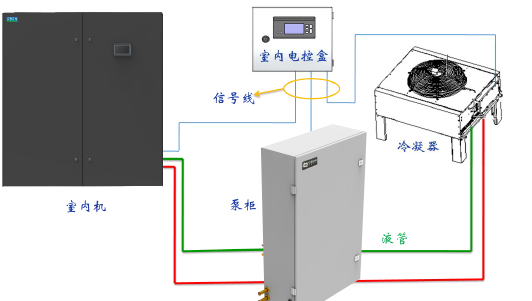
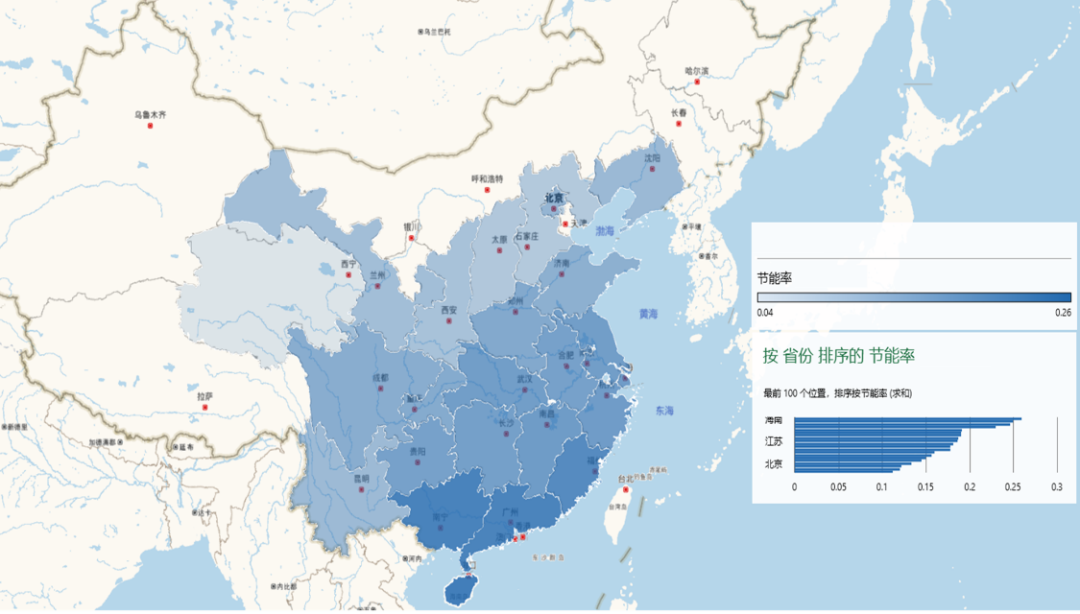
The energy-saving effect of fluorine pump technology depends on the utilization time of the natural cold source, that is, the applicability in our country is different, and the applicability is gradually increasing from south to north.
2.2 Frequency conversion transformation
Due to historical and technical problems, most of the air-cooled precision air conditioners used in communication buildings in the early years were fixed-frequency air conditioners. In order to maintain the temperature of the computer room, the compressor can only start and stop frequently, which is bound to cause waste of energy and shorten the service life of the compressor. For this type of air conditioner, it cannot be directly replaced considering economic factors, and can only be reduced through transformation - frequency conversion transformation.
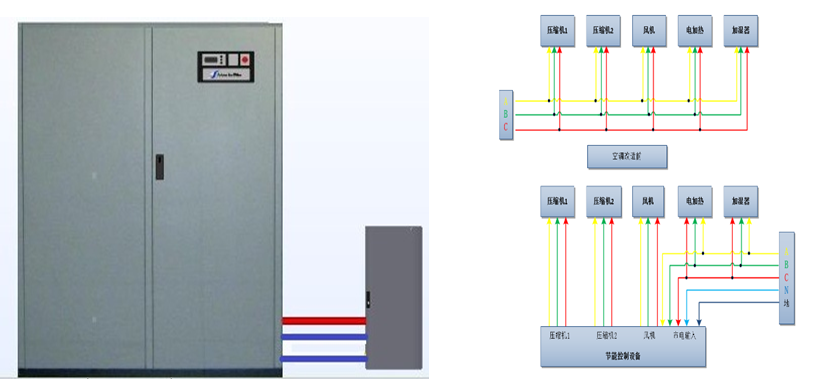
The wiring and installation of the energy-saving control cabinet is mainly to disconnect the connection power supply between the original compressor and the main power supply of the air conditioner, and add a set of power to the inlet end of the energy-saving control cabinet at the rear end of the main air conditioner. The power output of the energy-saving control cabinet is open to the upper end of the compressor, and the wiring of the indoor fan is the same. The wiring transformation of the energy-saving control cabinet does not change the wiring of the original control system of the air conditioner, and the energy-saving control cabinet always maintains and follows the operation logic of the air conditioner itself.
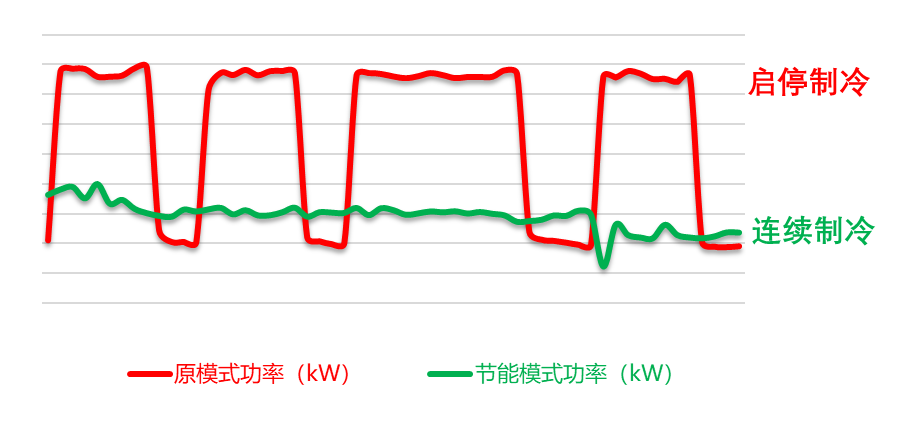
The energy-saving control cabinet adjusts the speed of the compressor according to the real-time demand of the cooling volume. The compressor can be similar to a constant torque load, and its power is directly proportional to the speed, and when the compressor speed decreases, the power decreases in equal proportion. For the air conditioning refrigeration system, reducing the compressor speed, the mass flow rate of the refrigerant decreases, and the heat exchange efficiency will be improved, thereby improving the cooling efficiency of the air conditioner. By reducing the speed of the compressor, the same refrigeration demand can be met with less power, the number of starts and stops of the compressor can be greatly reduced, and the energy-saving control cabinet can save energy and reduce the operation of the air conditioner.
In addition to the energy-saving effect, the implementation of frequency conversion transformation can also bring the following added value:
①Reduce the start and stop of the compressor and extend the life of the air conditioner.
②Improve the air supply accuracy and make the equipment safer.
③Real-time monitoring data, the energy-saving effect is real and credible.
2.3 Water-cooling transformation
Due to problems such as early civil engineering planning and later expansion of the computer room, the outdoor unit of the air-cooled precision air conditioner is often placed compactly, and there are balcony grilles and other obstructions around it, which is easy to cause high temperature alarms of air conditioners, and the energy consumption of air conditioners will also increase after the condensation temperature rises. In addition, if the communication building is close to a residential building, the fan noise of the air-cooled outdoor unit will also affect the daily life of residents, and they will often be complained about. In view of the above pain points, it is recommended to adopt the water-cooling transformation scheme.
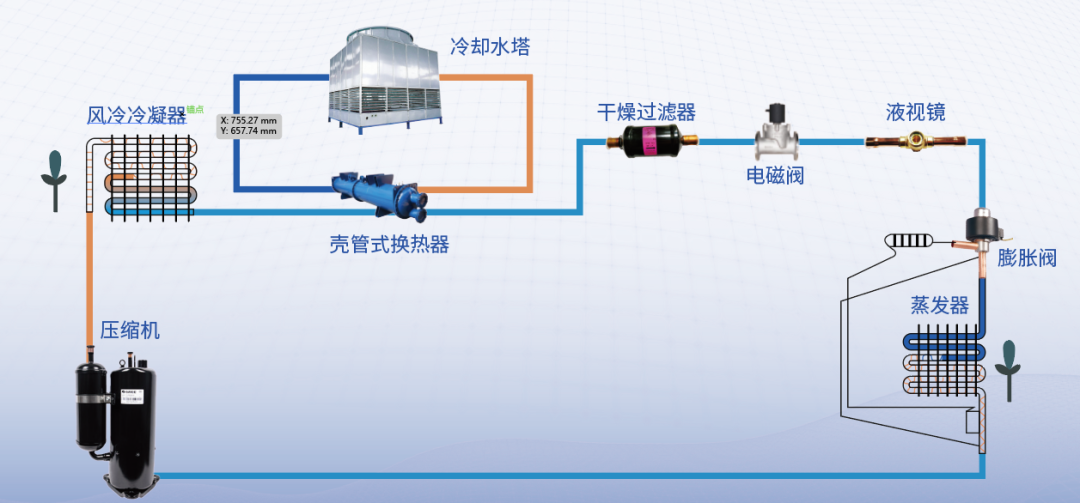
Transformation principle: The popular understanding of water cooling is to submerge the pipe of the hot medium (refrigerant) flowing in the cold medium (cool water), or the heat conductor with efficient heat transfer between the flowing hot medium and the flowing cold medium, and the heat of the hot medium and the cold medium are not directly compatible with mixing, and the heat of the hot medium is transferred to the cold medium through the thermal conduction interwall to reduce the temperature and pressure of the hot medium. The specific implementation is to connect the hydrofluorine heat exchanger in series on the outlet side of the condenser of the outdoor unit of the air conditioner, and the refrigerant transfers heat to the water through the heat exchanger, and the water side relies on the water pump to drive the circulation to bring the heat to the cooling tower for heat dissipation.
Contrary to fluorine pumping transformation, the energy-saving effect of water-cooling transformation is gradually increased from north to south. This is due to the fact that there are more low temperature weather in the northern region, the opening frequency of air-cooled outdoor units is relatively low, and the condensation temperature is in the normal range, and the energy-saving effect of water-cooling transformation will be reduced.
2.4 AI group control transformation
Reducing the operating energy consumption of the air conditioner in the computer room In addition to improving the performance of the air conditioner itself, operation management is also very important. Due to the limitations of manpower, experience, energy and other conditions, human management will have the following problems:
①The air conditioner is turned on all year round - when the room temperature does not reach the warning value, the air conditioner has been running without load, resulting in unnecessary power consumption;
②The air conditioner adopts a fixed temperature/air volume setting - it cannot be dynamically adjusted according to the air conditioning state and room temperature, resulting in excess power consumption;
③The air conditioner (during construction) is artificially adjusted to low temperature - there is no recovery mechanism, resulting in additional artificial power consumption;
④Air conditioner aging - The aging air conditioner will consume more electricity to achieve the preset cooling capacity. In order to solve the above pain points, it is recommended to use AI group control transformation to intelligently manage the air conditioning in the computer room.
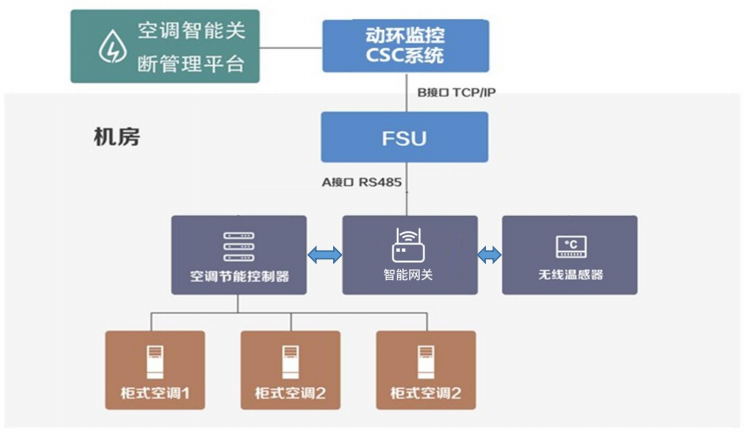
Transformation principle: Install an analysis and control unit for all air conditioners in the computer room, and install temperature sensors in the cabinet and return air channels, and realize the intelligent group control of air conditioners in the computer room with embedded intelligent software and Internet of Things technology to achieve the best energy consumption, the best air conditioning life, and the best temperature control:
①Air conditioning EER analysis: use the analysis control unit to analyze the EER (refrigeration efficiency) of each equipment to identify the efficiency of each air conditioner;
② Cooling demand statistics: Monitoring calculates the real-time cooling demand of the computer room based on the data analysis of distributed temperature sensor clusters.
③Air conditioning cluster control: Analyze the control unit cluster and sensor cluster to report the data to the intelligent gateway through AirLink wireless Internet of Things, and the intelligent gateway will intelligently control the start and stop of each air conditioner according to the refrigeration demand and air conditioning performance data, and use the load balancing algorithm to start and stop each air conditioner.
2.5 Airflow organization transformation
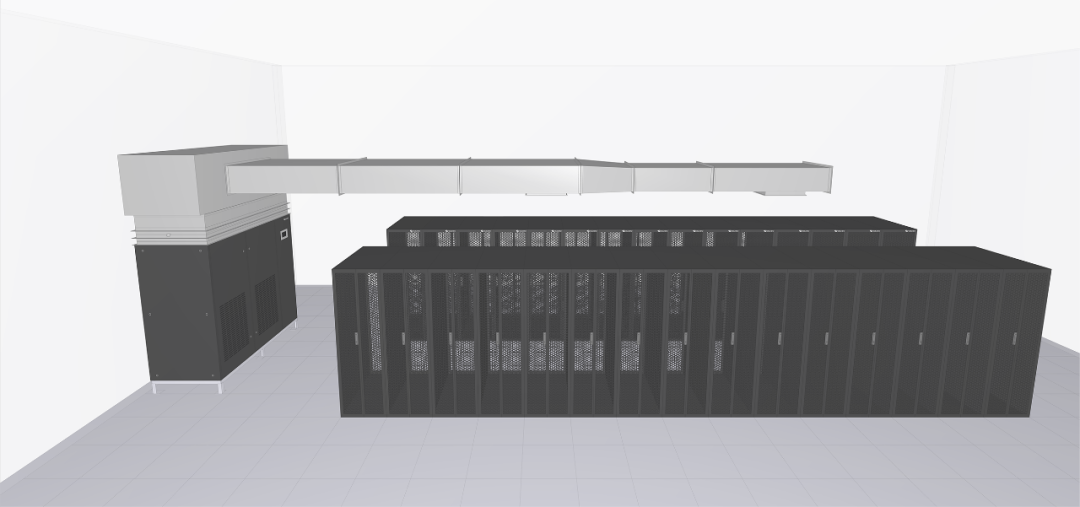
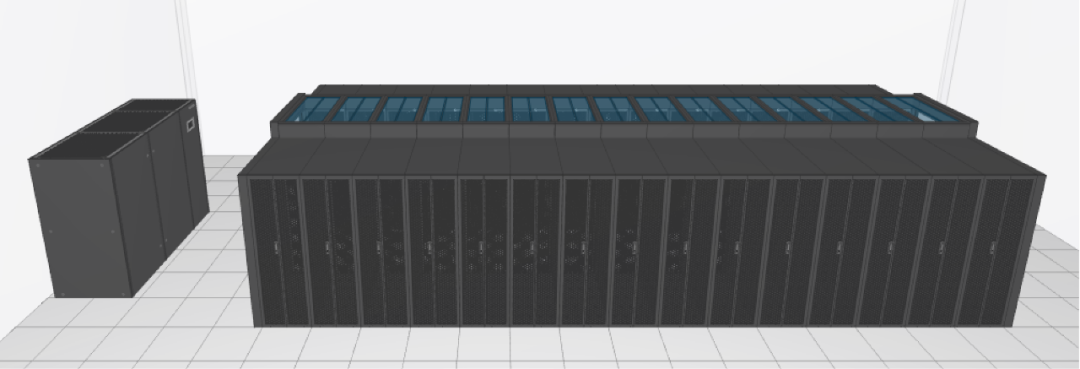
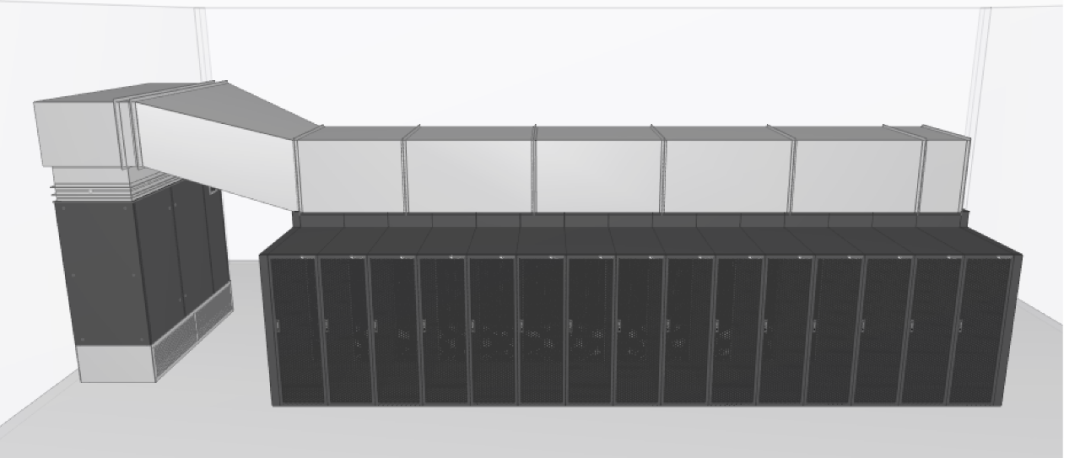
The airflow organization in the computer room directly determines the set return air temperature of the air conditioner. Under unfavorable conditions such as hot spots caused by insufficient air intake of the remote cabinet and cold and hot mixing of air conditioner return air, the ambient temperature of the computer room can only be maintained by reducing the return air temperature set by the air conditioner. The lower the return air temperature, the higher the energy consumption of the air conditioner. In order to solve such problems, it is necessary to carry out airflow organization transformation according to the actual situation of the computer room, and several efficient and feasible transformation schemes are also recommended below.
2.6 Summary
The selection of energy-saving renovation plans is inseparable from the actual situation on site, and it is necessary to analyze the specific project specifically. Objective factors such as civil foundation, climatic conditions, computer room planning, and economic conditions will affect the selection of the scheme. The solutions can also be combined to provide a comprehensive solution that satisfies customers, is feasible, and has a short payback cycle.


