


1. Significant differences in energy efficiency performance
In terms of energy efficiency, air energy heat pumps show obvious advantages. Its energy efficiency ratio (COP) often reaches 3-4 or even higher, far exceeding the energy efficiency ratio (EER) range of air conditioners 2-3. This means that when providing the same amount of heat or cooling, the air energy heat pump consumes less electrical energy, achieving higher energy efficiency and is a more energy-efficient choice. In particular, air energy heat pumps do not consume a lot of electrical energy for defrosting like air conditioners in the heating process, which further improves their heating efficiency.
2. Flexibility and space considerations of installation methods
Air conditioners are mostly installed in a way that connects indoor and outdoor units, providing high flexibility to adapt to different house structures and decoration styles. However, this also brings the problem of indoor space occupancy, which may affect the overall layout and aesthetics of the interior decoration. In contrast, air energy heat pumps may require more consideration of external environmental factors in installation, but they have less impact on indoor space.
3. Comfortable comparison of operating noise
Air conditioners tend to produce loud noise during operation, especially at low speeds, which may adversely affect the user's rest and working environment. Air energy heat pumps, on the other hand, are known for their low operating noise, which benefits from the optimization of their compressor working mechanism, which reduces noise interference caused by continuous operation and creates a more peaceful living environment for users.
4. The unique advantages of the defrosting mechanism
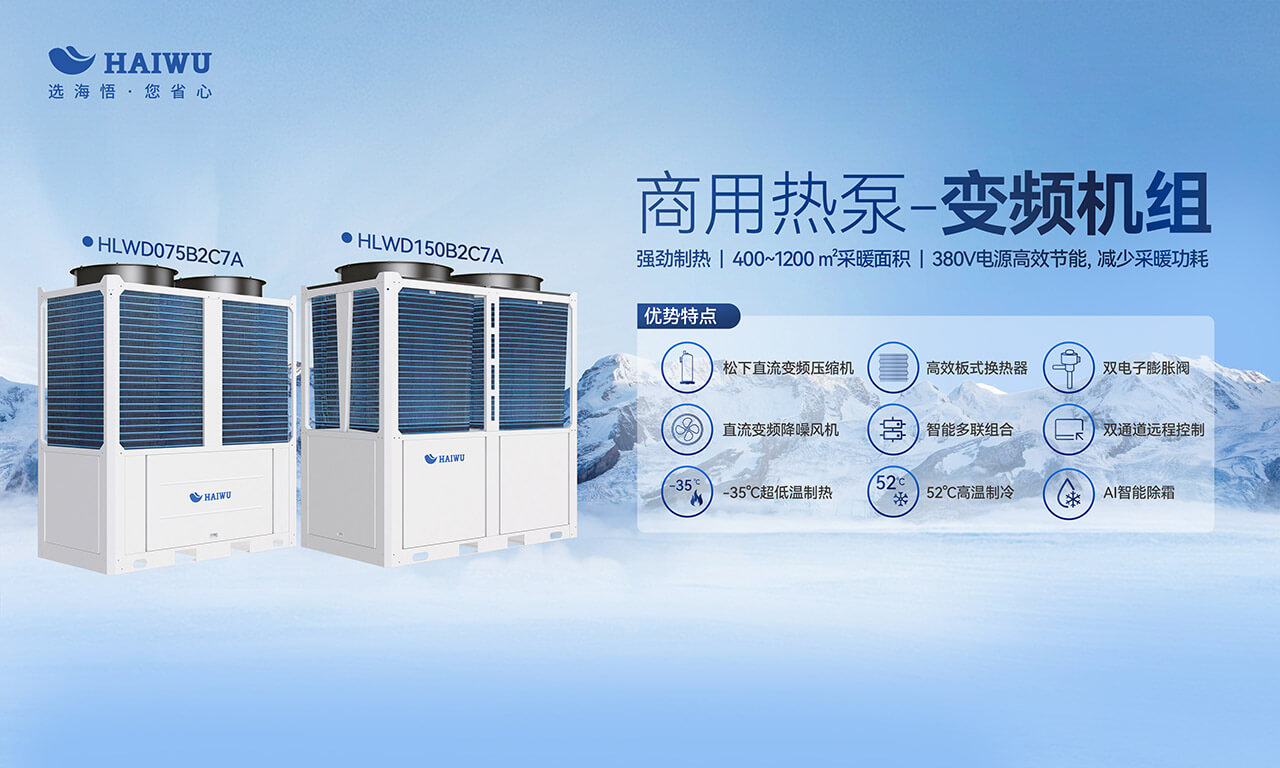
The defrosting mechanism is one of the important technical differences between the two. Air conditioners operate under large temperature differences and heat transfer, which can easily lead to frost problems, especially in extreme climatic conditions. Air energy heat pumps use small temperature difference heat transfer technology, which effectively reduces the risk of frost formation. In addition, the air energy heat pump is also equipped with pre-defrost technology, which further reduces frosting by maintaining the middle and lower temperature state of the heat pump main engine, ensuring the stable operation of the equipment in a low-temperature environment.
5. The ability to adapt to different use environments
In terms of usage environment, the two also show different adaptability. Household central air conditioners mainly follow the national standard GBT 7725-2004, and their heating conditions are set in a relatively high temperature range. The low-temperature air energy heat pump refers to the GB/T25127.1-2010 standard, which can maintain efficient heating at lower outdoor temperatures (-20°C), showing stronger environmental adaptability and wider application potential.

In summary, there are significant differences between air energy heat pumps and air conditioners in terms of energy efficiency, installation mode, operating noise, defrosting mechanism and use environment. Users should consider their own needs and actual environmental conditions when choosing to choose the most suitable product for themselves.


