


1. Introduction
The data center is the infrastructure of all information technology, and it is a place for centralized processing, storage, transmission, exchange, monitoring and management of data. Data centers involve many specialties and systems, among which the power supply and distribution system is an important system for providing power for electronic information equipment, ranking first in the proportion of data center infrastructure investment, providing energy guarantee for the safe and reliable operation of data centers.
2. The basic form of the power supply and distribution system
Article 3.2.1 of the national standard "Data Center Design Code" GB50174-2017 stipulates that "the infrastructure of Class A data centers should be configured according to fault-tolerant systems". The so-called "fault tolerance" means that the data center needs to provide "dual" or "multiple" security guarantees. In terms of power supply and distribution, the 2N system can provide a "double" guarantee for data centers. The data center power supply and distribution system is mainly composed of five parts, namely 10kV power distribution device, transformer, 0.4kV power distribution device, uninterruptible power supply system, and uninterruptible power output power distribution device. Figure 1 shows the logic block diagram of the 2N power supply and distribution system that meets the "fault tolerance" requirements of Class A data centers.
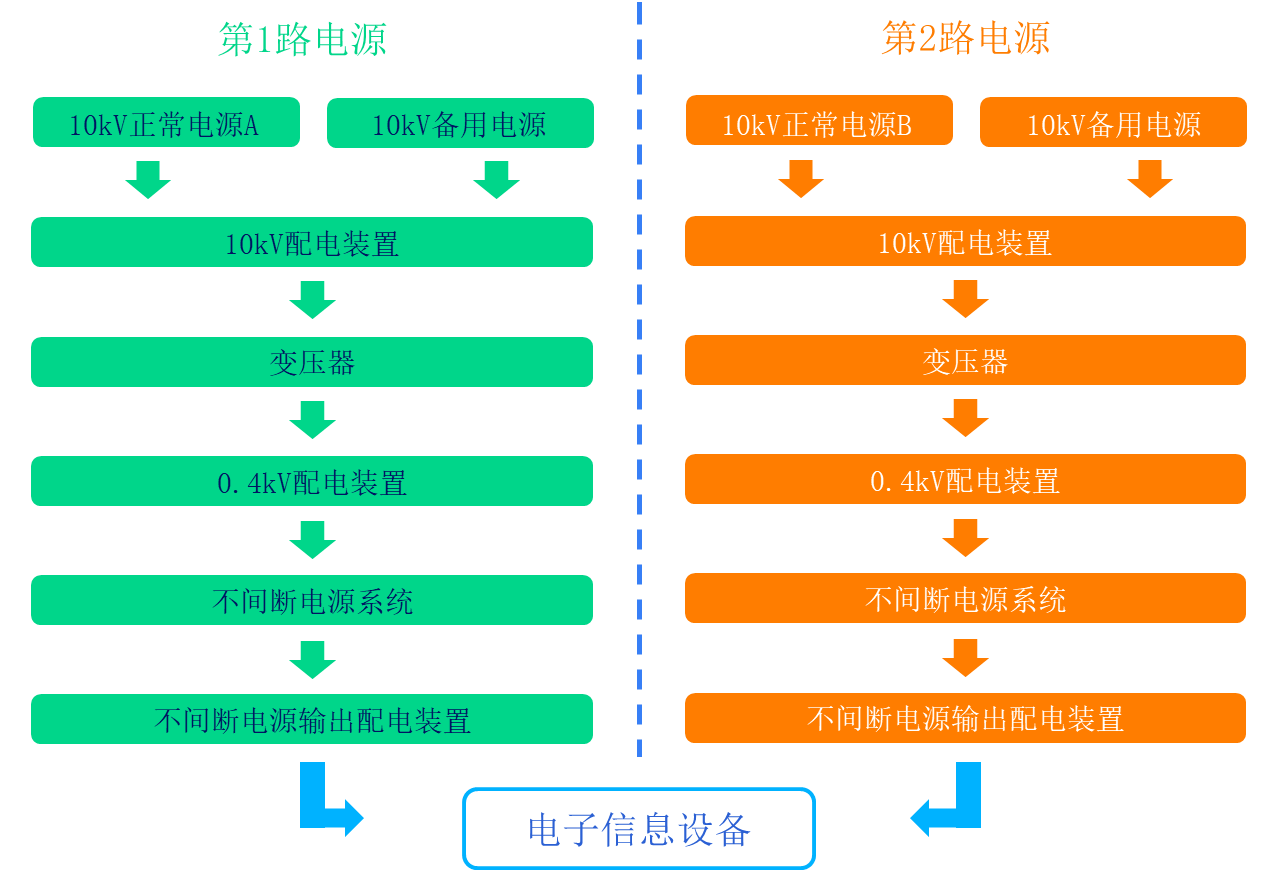
Fig.1 Block diagram of the logic of 2N power supply and distribution system
Class A data centers are powered by dual power sources with backup power supplies. During normal operation, the data center is powered by dual power sources, and each power supply bears 50% of the load. When one power supply fails, the other power supply bears all the load; When both power supplies fail, the backup power supply is put into operation to bear the needs of the full load.
The 10kV power distribution device distributes the power supply to the transformer, mainly including the normal power inlet circuit breaker cabinet, metering cabinet, backup power inlet circuit breaker cabinet, automatic transfer switch electrical cabinet, outlet circuit breaker cabinet, bus breaker cabinet, busbar, etc.
The transformer converts the 10kV power supply into a 0.4kV power supply, and the 0.4kV distribution device distributes the power to the uninterruptible power supply system (including AC UPS and DC UPS) and other equipment, mainly including the 0.4kV inlet circuit breaker cabinet, filter compensation cabinet, outlet circuit breaker cabinet, bus breaker cabinet, busbar, etc.
The circuits inside the electronic information equipment are working with DC power supply, so a power module is designed inside the electronic information equipment, whether the power supply is AC or DC, it becomes DC after passing through the power module, so most servers and other electronic information equipment can accept AC power supply or DC power supply, the principle of which is shown in Figure 2. Figure 2 shows the working principle of the power module of an electronic information device when it receives AC or DC power. When the power module inputs AC power, the current flow direction is A→2→C→D→4→B around the positive half of the AC current; In the negative half of the AC current, the current flow direction is B→3→C→D→1→A, forming a DC power supply between C and D. When the power module inputs DC current, and A is the positive electrode and B is the negative electrode, the current flow direction is A→2→C→D→4→B, when B is the positive electrode and A is the negative electrode, the current flow direction is B→3→C→D→1→A, forming a DC power supply between C and D.
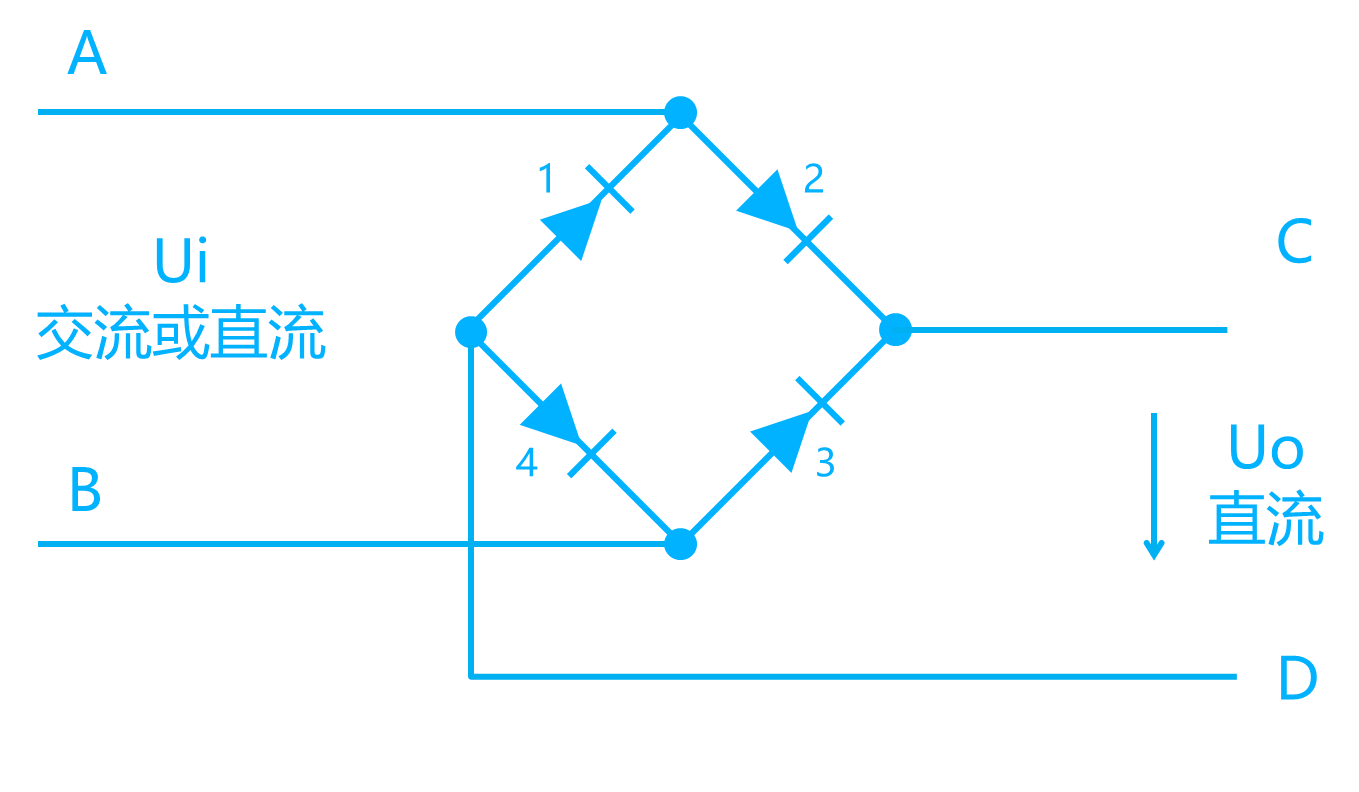
Figure 2 The working principle of the power module accepting AC or DC power supply
The AC UPS provides the AC uninterruptible power supply for the power module, and the mains power supply is output to the UPS power distribution device after improving the power quality through the AC UPS. UPS power distribution devices mainly include incoming circuit breaker cabinets, outgoing circuit breaker cabinets, column head cabinets or small power distribution busbars.
It is the DC UPS that provides DC uninterruptible power for the power module. In order to save energy and improve the reliability of the power supply, the DC UPS power supply reduces the inverter link. At present, some data centers use HVDC (high voltage direct current) power supply, with two voltages: 240V and 336V, and the principle is to rectify the AC power supply to DC power supply and then supply power to electronic information equipment. The power supply is output to the power distribution device after improving the quality and changing to DC through HVDC, and the HVDC output distribution device mainly includes DC outlet circuit breaker or fuse, column head cabinet, etc.
To improve the reliability of the power supply, the electronic information equipment is powered by a dual power supply. The power supply and distribution system of large and medium-sized data centers is from the 10kV power supply to the 10kV power distribution device, transformer, 0.4kV power distribution device, uninterruptible power supply system and uninterruptible power output distribution device, to the power supply of electronic information equipment. In this process, two applications affect the data center power supply and distribution system:
The first application method: AC UPS power supply and DC UPS power supply (or HVDC high voltage DC power supply).
The second application mode: "discrete" and "integrated" power supply and distribution systems.
3. Uninterruptible power supply system
The basic function of the uninterruptible power supply system is to ensure the continuity of the power supply, when the electronic information system is running, the allowable power loss duration is 0~10ms, when the power off time exceeds 10ms, the electronic information system will interrupt the operation, data and information are lost. If it is a Class A data center, the interruption of the operation of the electronic information system will cause significant economic losses or cause serious chaos in public places. Therefore, Article 8.1.7 of the national standard "Data Center Design Code" GB50174-2017 stipulates that "electronic information equipment should be powered by an uninterruptible power supply system". Article 2.1.40 of the specification defines an uninterruptible power supply system: "A system composed of a combination of converters, switches and energy storage devices that output AC or DC power when the input power supply is normal or faulty, and maintain the continuity of power supply to the load for a certain period of time." The "output AC power" mentioned here is usually called AC UPS power supply; "Output DC power" is often referred to as a DC UPS power supply or HVDC (High Voltage Direct Current) power supply.
3.1 AC UPS power supply
AC UPS power supply is composed of three basic units: rectifier, battery and inverter, which is to improve power quality and continuous power supply, and provide power supply for electronic information equipment for a certain period of time when the mains power supply fails or is interrupted. When the mains power is normal, the current is supplied to the electronic information equipment through the rectifier and inverter, and the battery is charged through the rectifier. There are two currents in the path:
The first way: mains power - rectifier - inverter - electronic information equipment;
The second way: mains power - rectifier - battery.
When the mains power fault or rectifier fault, the control circuit automatically switches to the battery to power the electronic information equipment, and the current path: battery - inverter - electronic information equipment; If it is only a rectifier failure, the electronic information equipment can be powered by a UPS bypass.
The input and output power sources of AC UPS can be single-phase or three-phase, which are divided into three types:
The first type: single-phase input single-phase output, that is, the input and output of the UPS are single-phase AC 220V;
The second type: three-phase input single-phase output, that is, the input of the UPS is three-phase 380V, and the output is single-phase AC 220V;
The third type: three-phase input three-phase output, that is, the input and output of the UPS are three-phase AC 380V.
Due to the vigorous development of electronic information technology, a single project data center has developed from a few hundred square meters more than ten years ago to hundreds of thousands of square meters at present, and the power load has also increased from a few hundred kilowatts to hundreds of thousands of kilowatts.
3.2 DC UPS power supply
DC UPS power supply consists of two basic units: a rectifier and a battery. When the mains power is normal, the current is supplied to the electronic information equipment through the rectifier, and the rectifier charges the battery. There are two currents in the path:
The first way: mains power - rectifier - electronic information equipment;
The second way: mains power - rectifier - battery.
When the mains power fault or rectifier fault, the control circuit automatically switches to the battery to power the electronic information equipment, and the current path: battery - load; If it is only a rectifier failure, the power supply to the electronic information equipment will stop after the battery is discharged, regardless of whether the mains power is normal or not.
In order to prevent such failures from causing electronic information equipment downtime, Class A data centers can adopt the "fault-tolerant" power supply system recommended by Article 3.2.1 of the National Standard "Data Center Design Code" GB50174-2017, or the "power supply method combining uninterruptible power supply system and mains power supply system" recommended in Article 3.2.2.
Article 3.1 of the national standard "Technical Requirements and Test Methods for 240V/336V DC Power Supply Systems for Information and Communication" GB/T 38833-2020 defines high-voltage DC power supplies (HVDC) for communications: DC power supply systems with a nominal voltage of 240V or 336V, which can be used for information and communication equipment. The high voltage mentioned here is relative to the traditional -48V DC communication power supply.
The 240V high-voltage DC system can be compatible with existing electronic information equipment, that is, it directly replaces the 220V AC power supply to power the electronic information equipment, which is easy to use and does not need to modify the existing electronic information equipment. The 336V HVDC system is not compatible with the existing electronic information equipment, and the power module of the existing electronic information equipment needs to be transformed, but the overall application efficiency of the 336V HVDC system can be improved by 8~10% compared with the 240V system.
3.3 Physical structure of an uninterruptible power supply system
Uninterruptible power supply systems can be divided into three structural forms: tower, modular and rack.
3.3.1 Tower uninterruptible power supply system
The tower uninterruptible power supply system is the most widely used uninterruptible power supply in data centers, which is characterized by large single capacity (can exceed 1000KVA), a small number of directly paralleled units, and high reliability, which can meet the application needs of large data centers.
3.3.2 Modular (modular) uninterruptible power supply system
Usually, an uninterruptible power supply with the function of independent uninterruptible power supply and can be installed, disassembled, moved and replaced according to the module as a whole is called a modular uninterruptible power supply system. Modular UPS features the following features:
1) Reliability: multiple modules can be operated in parallel in specially designed cabinets, and the overall operation will not be affected by the problem of a certain module;
2) Manageability: The module is a unit with independent functions and can operate independently in the system, the weight of the unit is relatively light, and the structure can be installed, disassembled, replaced, and moved as a whole;
3) Flexibility: When the load increases or decreases, a redundant system can be automatically formed to achieve flexible and convenient capacity expansion or reduction.
4) Maintainability: It has a hot-swappable function with electricity to ensure the continuity of power supply. When a module needs to be repaired and replaced, it can be disconnected from the live system to achieve online maintenance, and the module can be inserted into operation immediately after the repair is completed.
3.3.3 Rack-mounted uninterruptible power supply system
The rack uninterruptible power supply system includes rectifiers, inverters, bypasses, control and display units, operation panels, batteries and other units, and its application characteristics are that they can be installed in standard cabinets, that is, they can be installed as separate cabinets, or they can be installed in the same cabinet as electronic information equipment, which not only saves physical space, but also saves equipment and materials such as power distribution and cables, and is the best choice for micro data centers.
4. "Discrete" and "integrated" power supply and distribution systems
The data center power supply and distribution system consists of five parts: 10kV power distribution device, transformer, 0.4kV power distribution device, uninterruptible power supply system and uninterruptible power output distribution device. "Discrete" means that various equipment in the power supply and distribution system are purchased, installed, debugged separately, and connected by cables or busbars for joint commissioning and testing. "Integration" means that all the equipment and materials in the power supply and distribution system are re-optimized and integrated into a single unit after production and commissioning in the factory.
4.1 "Discrete" power supply and distribution system
The "discrete" power supply and distribution system is a traditional application method and the most used method in data centers, with the advantages of a large range of equipment procurement options, easy judgment in case of failure, and relatively convenient operation and maintenance. But there are also some problems:
1) Because the equipment is installed separately, the equipment needs to be installed, safe and operated at a distance, so the equipment occupies a large building area.
2) Due to the need to connect a large number of cables or busbars between equipment, the construction volume and construction difficulty increase, and at the same time, the cost of cables and other materials is also increased, and the economy is poor.
3) Due to the large number of equipment, the bidding and procurement time is long, which affects the construction period.
4) Due to the scattered installation of equipment, there are many equipment brands, resulting in increased monitoring equipment, monitoring difficulty and operating costs.
4.2 "Integrated" power supply and distribution system
4.2.1 Application mode
In terms of equipment input power supply, you can choose to input 10kV power supply to form "medium and low voltage equipment integration", or you can choose to input 0.4kV power supply to form "low voltage equipment integration"; In terms of equipment output power supply, you can choose to output AC power supply to form "AC equipment integration", or you can choose to output DC power supply to form "AC and DC equipment integration". The difference between the various combinations is whether a 10kV power distribution device and transformer are included, and whether an AC UPS or a DC UPS is used.
1) "Medium and low voltage equipment integration" is to integrate the five components of the data center power supply and distribution system (except for the column cabinet or the small bus of power distribution) to form a "large and fully integrated" power supply and distribution equipment.
2) "Low-voltage equipment integration" does not include 10kV power distribution devices and transformers, mainly composed of 0.4kV power distribution devices, uninterruptible power supply systems and uninterruptible power output distribution devices. It is characterized by the separate arrangement of 10kV medium voltage and 0.4kV low voltage equipment to ensure safety and easy maintenance.
3) "AC equipment integration" is to take AC UPS as the core equipment, and use the busbar in the cabinet to integrate the power distribution devices before and after the UPS with the UPS to form an "integrated" power distribution equipment.
4) "AC and DC equipment integration" is to form "integrated" power distribution equipment with DC UPS or high-voltage DC HVDC as the core equipment.
Various combinations are not fixed and can be recombined according to actual needs. For example, "medium and low voltage equipment integration" and "AC and DC equipment integration" are combined, with 10kV medium voltage power input and 240V DC output to form "medium and low voltage AC and DC equipment integration".
4.2.2 Advantages
1) Reduce the construction area occupied by equipment. The main computer room is the working area of electronic information equipment, and the support area is the working area of power supply and distribution and air conditioning equipment, and the main room and support area occupy most of the area of the data center. The area of the auxiliary area and the administrative area is basically determined, and the amount of the area occupied by the support area determines the area of the main computer room, which also determines the number of cabinets. Compared with the "discrete" power supply and distribution system, the "integrated" power supply and distribution equipment can save 30~40% of the building area.
2) The "integrated" power supply and distribution system includes medium and low voltage power distribution devices, transformers and uninterruptible power supplies, and the electrical connections between the equipment are completed in the factory, and the connection quality is higher than the on-site construction quality. Compared with the "discrete" power supply and distribution system, "integration" can reduce the procurement and installation of some cables, busbars and trays, and shorten the procurement and construction period of equipment and materials, so as to achieve rapid installation and use.
3) The "integrated" power supply and distribution system is convenient for centralized monitoring and management, and can integrate the distribution link and monitor it in a unified manner.
4.2.3 There are problems
1) Due to the close distance between the components of the "integrated" power supply and distribution system, the short-circuit current increases, and the selective protection of the upper and lower circuit breakers is difficult to reasonably realize, so it is necessary to choose a circuit breaker with stronger breaking ability.
2) Due to the large number of various equipment in the power supply and distribution system, the equipment is large after "integration", which causes difficulties in equipment transportation, installation, operation and maintenance.
5. Conclusion
Data center industrialization is the development direction of future data center construction methods, characterized by "design standardization, manufacturing modularization, construction and assembly, operation and maintenance intelligence, and full life cycle digitalization" to achieve sustainable development of data centers. The "uninterrupted" power supply and distribution system is the security guarantee of the data center, and the "integrated" power supply and distribution system is one of the ways to realize the industrialization of the data center.


