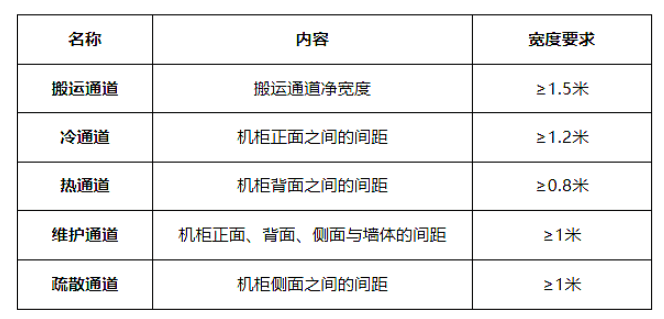
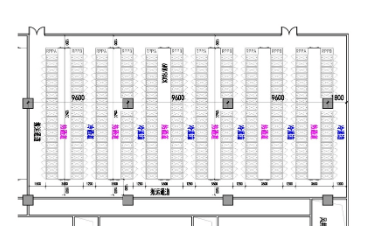
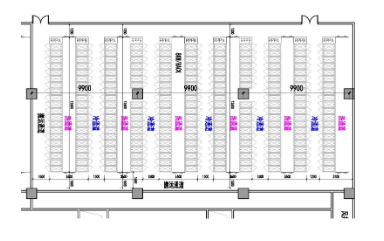
The minimum width of the 8kW/rack machine room is 1.5 meters according to the cold aisle, and the column network can be 9.9 meters
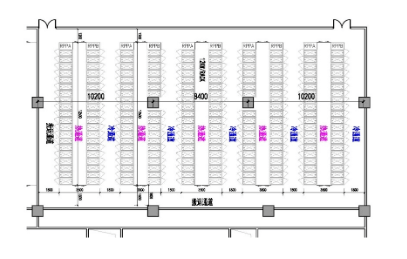
The 12kW/rack machine room can be combined with 10.2 meters and 8.4 meters according to the width of the cold aisle
In summary, according to the width requirements of hot and cold channels, reasonable selection of column mesh can effectively reduce the space occupied by concrete columns and improve the cabinet rate most intuitively, which is the most basic and simple method.
The data center building includes data room, power room, battery room, air conditioning equipment room, diesel generator room and other components, and fully considers factors such as power, air conditioning cooling capacity, number of cabinets and total cabinet power in the design, so as to maximize the utilization of power resources and reduce PUE, WUE and other indicators. Therefore, the data center design usually adopts a modular layout, and the total power consumption, number of racks, and air conditioning equipment configuration are derived according to the capacity of the transformer and UPS, so as to form a standard computer room module, which is combined to form a computer room unit, and the computer room unit forms a complete building plan through the transportation space link and supporting room assistance.
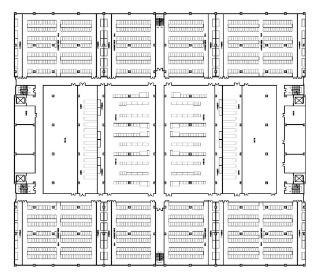
Intensive layout: Under conditions such as fire evacuation, the same type of equipment can be placed and processed in a centralized manner, which can reduce the total number of corresponding air-conditioning equipment backups, and effectively reduce the building space occupied by separate equipment. For example, in the overall layout, the power room and battery room are arranged in the middle of the building plane, and the data room is arranged on both sides, and the distance from the power supply cable to the computer room is short, which is the most reasonable.
See the figure below for details:
In the above figure, the power room and battery room are arranged in the middle of the building, with a small number of building function rooms, a small number of spare equipment such as air conditioning, and a close distance of power cables.

Data center buildings are generally divided into two types of buildings in traditional architectural design, namely (Class C2) industrial buildings and civil (public) buildings. There are significant differences between the two building types in fire protection design, as follows:
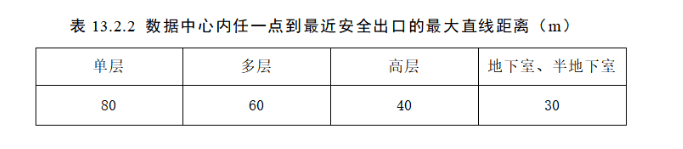
When the data center is designed according to the factory, the fire hazard classification of the data center should be classified as Class C, and the straight-line distance from any point in the data center to the nearest safety exit should not be greater than the provisions of Table 13.2.2. When the main engine room is equipped with a highly sensitive aspirated smoke detection fire alarm system, the straight-line distance from any point in the main room to the nearest safety exit can be increased by 50%.
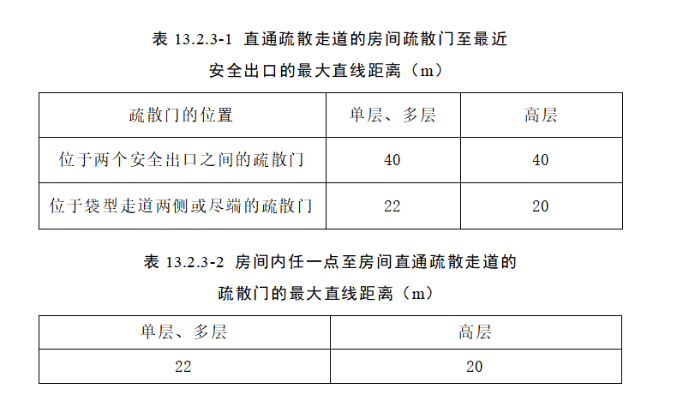
When the data center is designed according to a civil building, the straight-line distance from the evacuation door of the room leading to the evacuation walkway to the nearest safety exit shall not be greater than the provisions of Table 13.2.3-1. The straight-line distance from any point in each room to the evacuation door of the room shall not be greater than the provisions of Table 13.2.3-2. When all automatic fire extinguishing systems are used in the building, the safe evacuation distance can be increased by 25% in areas with automatic sprinkler fire extinguishing systems.
It can be seen that the requirements for evacuation distance, fire partitioning, etc. of industrial buildings are relatively relaxed, which is more conducive to the layout requirements of large-scale data center plans.
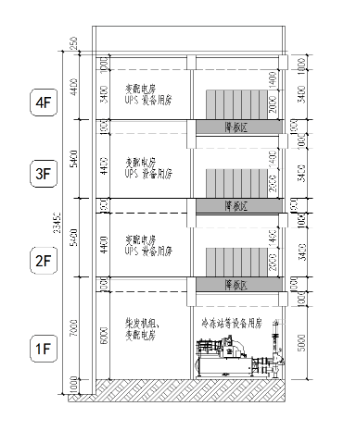
The height of the cabinet between the modules of the IT computer room is 2000~2200mm, and the upper part is equipped with comprehensive wiring and the outgoing tray of the head cabinet, with a strong and weak current spacing of 300mm and a net height requirement of about 3105~3400mm.
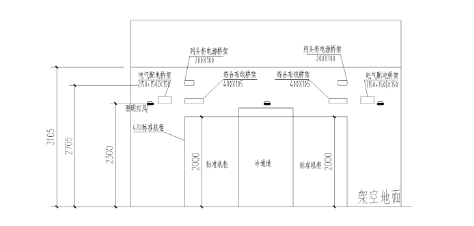
Taking room-level precision air conditioning as an example, the net height demand of the standard floor is subject to the net height demand between the modules of the IT computer room, and the room-level air conditioner usually adopts the scheme of setting up a static pressure box (800~1000mm high) and closing the cold (hot) channel, plus the structural beam height of about 1000mm. The building space height requirements for IT computer room modules are as follows:
Static pressure box: 800~1000mm + structural beam (plate) 1000mm + cabinet net height requirement 3105~3400mm = total floor height 4900~5700mm
The net height of the first floor: the clear height of the first floor is mainly to meet the net height demand of the transformer and distribution room and the refrigeration room, and the net height of the diesel unit is also considered when the diesel unit is set in the room
Drop area: equipment room net height 5000mm + structural beam (plate) 1000mm + static pressure box 800~1000mm = total floor height 6800~7000mm
Non-descending area: total floor height 6800~7000mm + structural beam (plate) 1000mm = net height of equipment room 5800~6000mm. This area can be equipped with equipment rooms such as diesel units with the greatest requirements for clear height.
Top floor height: The top floor height is based on the standard floor height minus the floor height of the static pressure box: 3900~4700mm.
The floor height design has certain differences due to different forms of air conditioning, which can be adjusted according to the specific situation of the project. When encountering specific planning conditions, the purpose of improving building utilization can be achieved through the control of the engineering floor height.
In summary, in the design of data center architecture, when the process requirements and investment are controlled, the utilization rate of the data center can be maximized in the limited physical space and the efficient development and construction of data center infrastructure can be maximized through different methods such as rational selection of column networks, optimization of room functional layout, selection of reasonable building types, and optimization of floor height.