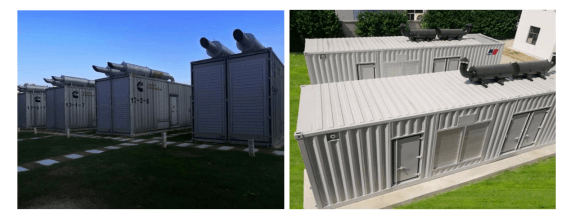
Data center power distribution transformation is a complex project that needs to meet a variety of specific requirements and standards, which is mainly divided into three parts: computer room level transformation, power distribution energy-saving transformation and computer room area optimization transformation.
According to the national standard GB50174-2017 "Data Center Design Code", data centers are divided into three levels: A, B and C. The level of economic and social damage and impact caused by data loss or network outage is determined according to the nature of the data center's use. In terms of power distribution, A, B and C have different requirements in terms of power supply, transformer architecture, backup diesel generator and its fuel storage system, uninterruptible power supply system, air conditioning system distribution, and physical isolation of substations.
1. Power supply transformation
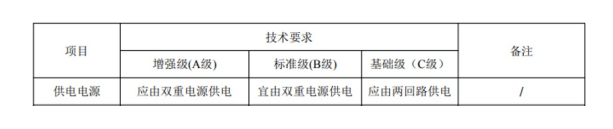
The specific requirements for the power supply of A, B and C data centers in the national standard GB50174-2017 "Data Center Design Code" are as follows:
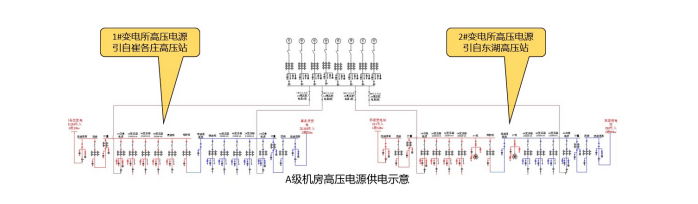
The C-level computer room only needs to draw two power supplies from the same high-voltage station; If the C-level computer room is changed to a B-class computer room, under certain conditions, different high-voltage stations should lead a power supply; If the C-level computer room is changed to a Class A computer room, a power supply must be connected by different high-voltage stations, and when one power supply fails, the other power supply should not be damaged at the same time.
2. Transformer architecture transformation
The specific requirements for the transformer architecture of A, B and C data centers in the national standard GB50174-2017 "Data Center Design Code" are as follows:
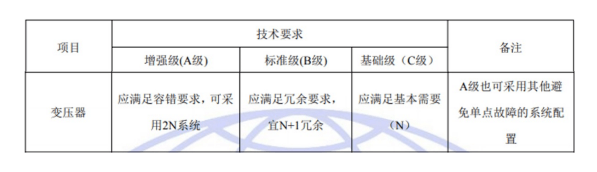
The C-level computer room does not need to consider the redundancy of transformers; If the C-level computer room is changed to a B-class computer room, an additional backup transformer needs to be added on the basis of the existing transformer, and when any working transformer fails, the backup transformer can replace the power supply; If the C-class computer room is changed to a Class A computer room, the transformer capacity needs to be configured according to twice the actual load.
3. Backup diesel generator system transformation
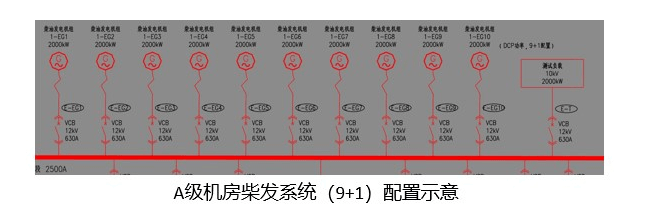
The specific requirements for backup diesel generator systems in A, B and C data centers in the national standard GB50174-2017 "Data Center Design Code" are as follows:
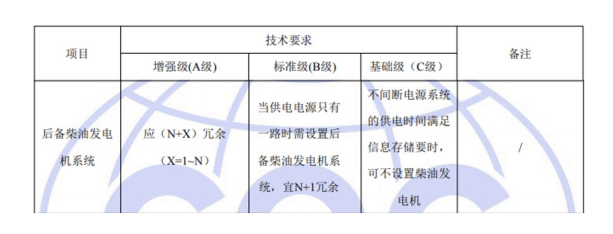
The C-level computer room does not need to be equipped with a diesel system; If the C-level computer room is changed to a B-level computer room, there is no need to set up a diesel generator system when supplying power from dual high-voltage power sources, and only when supplying a single power supply, the diesel generator needs to be set according to N+1 redundancy. If the C-level computer room is changed to a A-level computer room, regardless of the number of high-voltage power supplies, the diesel generation system needs to be set up according to N+X redundancy, generally X takes 1.
4. Transformation of diesel generator fuel storage system
The specific requirements for the fuel storage system of backup diesel generators in the A, B and C data centers in the national standard GB50174-2017 "Data Center Design Code" are as follows:
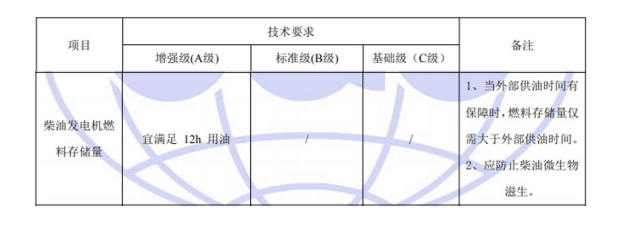
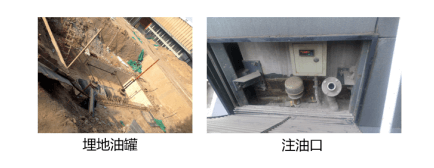
There is no requirement for diesel and oil storage in class C and class B computer rooms; If the C-class and B-class computer rooms are changed to A-class computer rooms, buried oil tanks need to be set up, and the oil storage capacity is considered according to the 12-hour diesel oil consumption, and the oil tank and oil pump also need to be considered for one use and one backup. When the oil injection port is set, the oil storage capacity can be maintained when the diesel engine runs to the external oil supply.
5. Uninterruptible power supply system architecture transformation
The specific requirements for the uninterruptible power supply system architecture of A, B and C data centers in the national standard GB50174-2017 "Data Center Design Specification" are as follows:
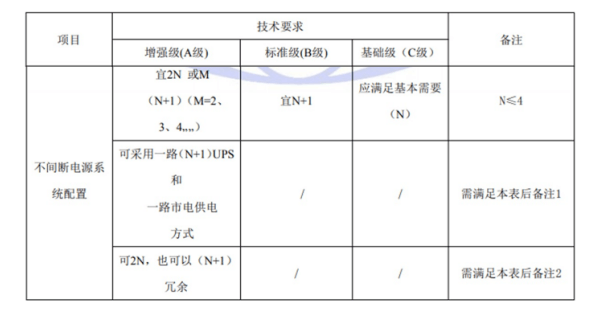
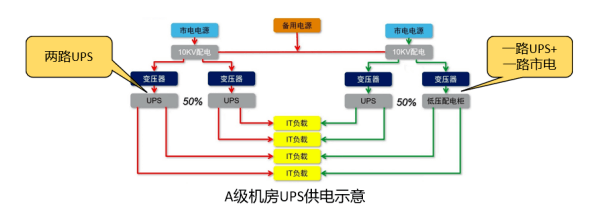
When the A-level data center meets the following requirements, the power supply of electronic information equipment can be a combination of uninterruptible power supply system and mains power supply system.
(1) During equipment or line maintenance, ensure the normal operation of electronic information equipment;
(2) The power supply quality of the direct power supply of mains power should meet the requirements of the normal operation of electronic information equipment;
(3) The power factor of the mains power access should meet the requirements of the local power supply department;
(4) The diesel generator system should be able to withstand the impact of capacitive loads
(5) The harmonic current component (mean root value of square) injected into the public grid should not exceed the allowable harmonic current value stipulated in the current national standard "Harmonics of Public Power Grids for Power Quality" GB/T14549.
When two or more data centers in different regions are built at the same time, back up each other, and data is transmitted in real time, and the business meets the continuity requirements, the infrastructure of the data center can be configured according to the fault-tolerant system or the redundant system.
The C-level computer room UPS can be selected according to the total capacity of the equipment, and there is no need for redundancy; In addition to every four UPSs in the B-level computer room, a redundant UPS should be set up to replace the power supply when one of the four units fails. A-level computer rooms can choose the 2N architecture or the mains power and UPS architecture according to the mains power situation, and the general project adopts the 2N architecture.
6. Bypass and standby time transformation of uninterruptible power supply system
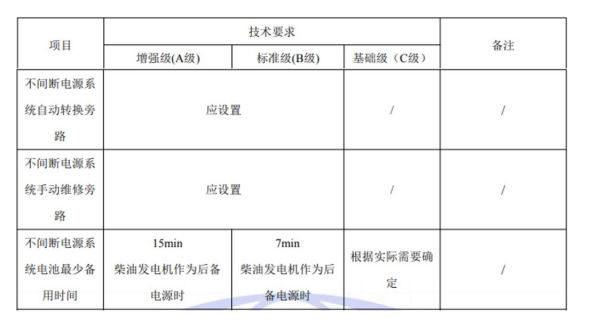
The specific requirements for the bypass and standby time of the uninterruptible power supply system of A, B and C data centers in the national standard GB50174-2017 "Data Center Design Code" are as follows:
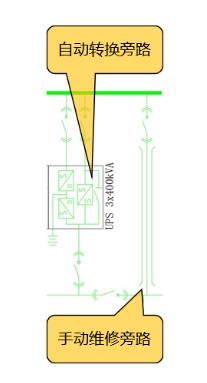
Class C computer rooms do not need to set up UPS automatic conversion bypass and manual maintenance bypass; If the C-level computer room is converted to a B-level or A-level computer room, the above bypass needs to be added. There is no UPS standby time requirement for the C-level computer room; The standby time of UPS in the B-level computer room is required to be 7 minutes; The standby time of UPS in the A-level computer room is required to be 15 minutes.
7. Power distribution transformation of air conditioning system
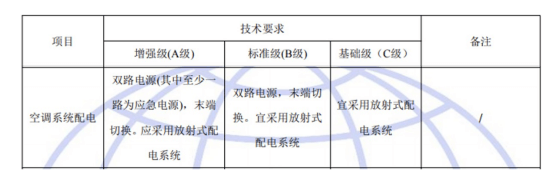
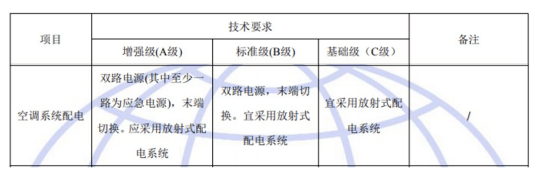
The specific requirements for the power distribution of air conditioning systems in A, B and C data centers in the national standard GB50174-2017 "Data Center Design Code" are as follows:
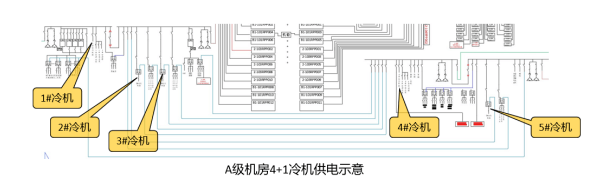
There is no requirement for switching the end of the air conditioner in the C-level computer room; If the C-level computer room is changed to a B-class or A-class computer room, some chillers need to be inter-projected at the end to ensure that when one substation is completely powered off, the other substation can carry all the chillers that meet the cooling conditions of the computer room.
8. Physical isolation and transformation of substations
The specific requirements for the physical isolation of substations of A, B and C data centers in the National Standard GB50174-2017 Data Center Design Code are as follows:
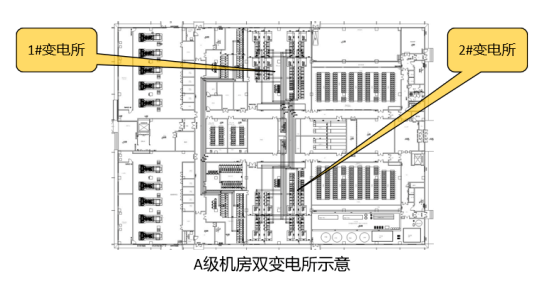
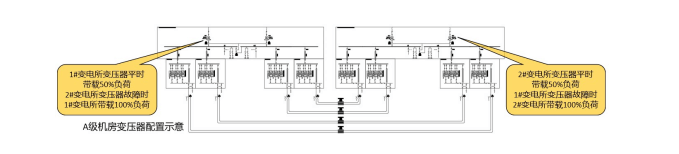
Physical isolation requirements for non-transformer power distribution stations in class C and B computer rooms; If the C-level and B-class computer rooms are changed to A-class computer rooms, each substation needs to be physically isolated. If the distribution system adopts a 2N architecture, at least two physically isolated substations need to be set up, each with a 50% load at ordinary times, and when one substation is completely powered off, the other substation carries 100% load. If the distribution system adopts a 2+1 DR architecture, it is necessary to set up at least three physically isolated substations, each with a load of 66% at normal times, and when one of the substations is completely powered off, the other two substations are loaded with 100% load.
-
Distribution energy-saving transformation
Many older data center equipment is less efficient and consumes more energy, and replacing old equipment with more efficient equipment can reduce energy consumption. For example, use more energy-efficient transformers, more efficient UPS, etc.
1. Energy-saving transformation of transformers
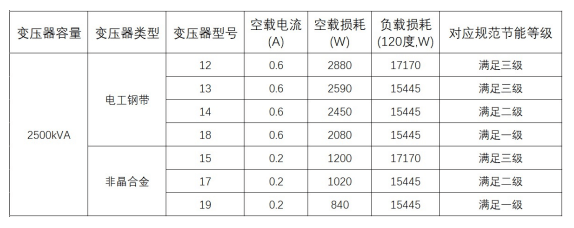
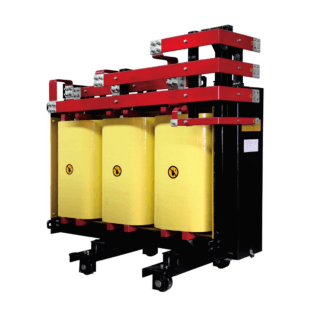
Choosing efficient power supply equipment can reduce energy consumption and improve power supply efficiency, such as: after changing to amorphous alloy transformer, the total transformer loss can be reduced by 30%. The energy-saving effect compared with traditional transformers is as follows:
Compared with traditional transformers, amorphous alloy transformers reduce no-load losses by about 2/3 and no-load current by about 70%, which has better energy-saving effects. Usually, in the 30-year effective life of the transformer, the operating cost of the transformer is as high as 6~7 times the manufacturing cost, and the energy consumption and electricity cost is the main component of the operating cost, and the reduction of the no-load loss of the transformer can not only improve our country's power utilization rate, reduce power waste, but also save operating costs for users and improve economic benefits.
2. Energy-saving transformation of uninterruptible power supply system
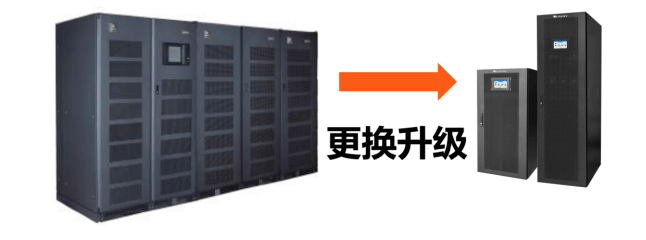
UPS equipment is one of the core equipment of the data center power supply system, and its efficiency directly affects the energy consumption of the power supply system. Choosing efficient UPS equipment can reduce energy consumption and improve the reliability of the power supply system.
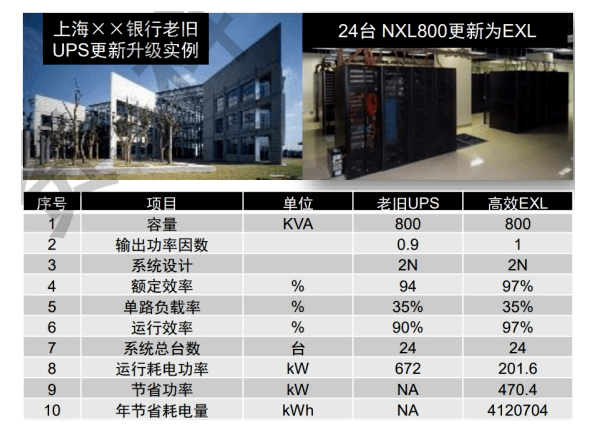
After the old UPS of a bank in Shanghai was changed to an energy-efficient UPS, the operating efficiency could be increased from 90% to 97%.
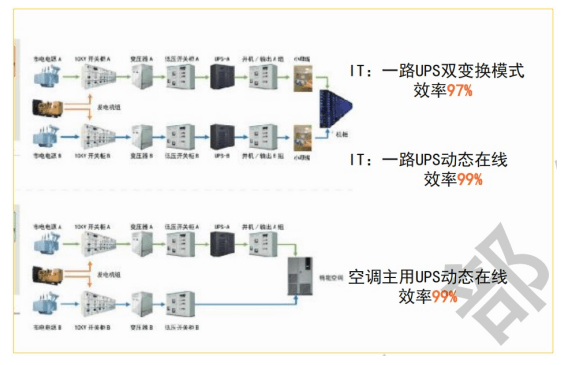
At the same time, the UPS dynamic online function is also implemented in the products of many manufacturers, which adopts adaptive intelligent algorithms to achieve 0ms fast switching in the event of network faults (voltage changes, low-impedance/high-impedance main power failures) and load faults (UPS downstream short circuits). With UPS's dynamic online function, its operating efficiency can be as high as 99%.
3. Transformation of photovoltaic energy storage system
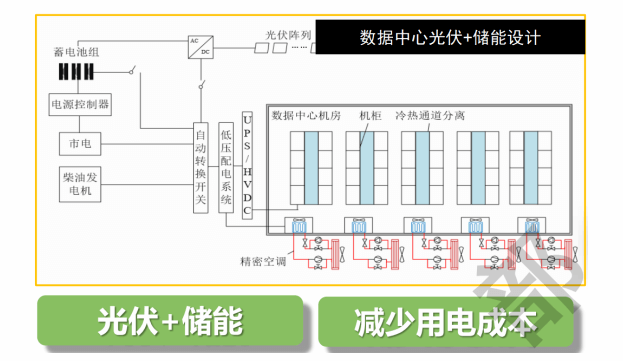
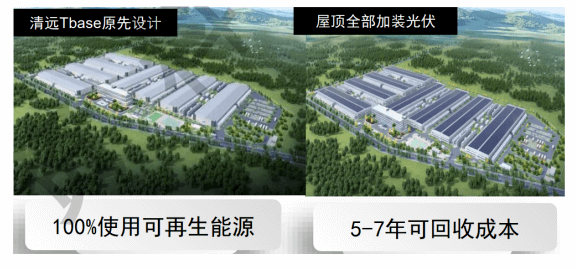
The project can add photovoltaic energy storage integrated equipment according to local conditions, photovoltaic, valley electricity, and flat electricity to charge the energy storage system, and discharge the energy storage system during peak power hours to reduce the cost of electricity in the computer room.
(1) Adopting the operation mode of "grid connection but not grid", the energy storage system can adopt different charging and discharging strategies according to the peak and valley time interval and electricity price of the data center.
(2) Charge the energy storage system with mains power during photovoltaic power generation, valley power and level power periods; The energy storage system is supplied during peak power hours, and the deficiency is supplemented by mains power.
(3) Reduce the cost of electricity in the data center and improve economic benefits; The integration of photovoltaic storage can reduce the comprehensive PUE by up to 0.035.
-
The area of the computer room is optimized and transformed
Data centers are divided into many functional areas, and as the power density of IT racks increases, the proportion of auxiliary areas occupies an increasingly high area. According to statistics, the area of medium voltage transformer distribution equipment, low voltage power distribution equipment, power quality processing equipment, uninterruptible power supply equipment, battery equipment and its auxiliary systems generally exceeds more than 50% of the data center cabinet area.
How to reduce the floor space of the data center power supply system, increase the floor space of the data center cabinet, and improve the space utilization rate and land resource utilization rate of the data center have become the key to the construction and transformation of the data center.
1. Prefabricated transformation of power distribution equipment
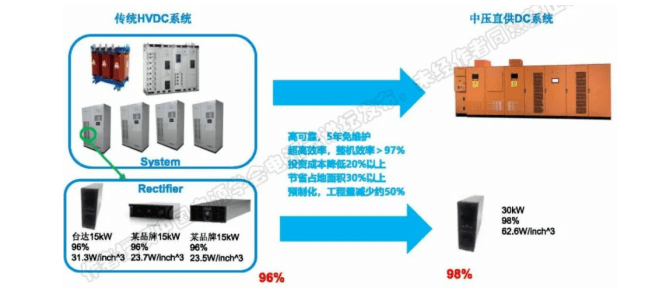
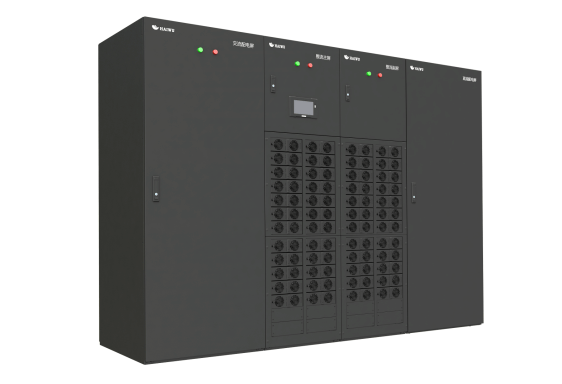
Prefabricated power modules streamline the intermediate links, reduce the use of equipment, and have a compact structural design, reducing the amount of engineering construction of cables and other materials, greatly saving investment costs, and saving the area of the computer room.
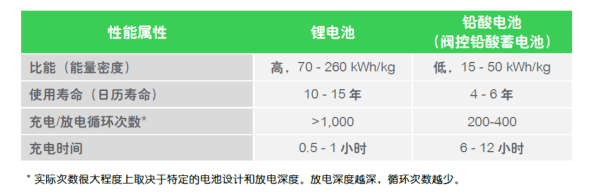
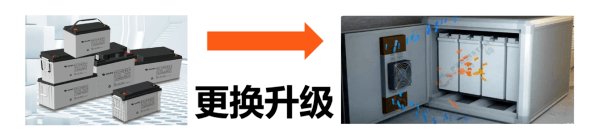
UPS lead-acid battery has become a future development trend, UPS lead-acid battery can save 60% of the computer room area, reduce the load of the computer room by 70%, and reduce the civil construction cost of the computer room accordingly. At the same time, it has a number of advantages that far exceed traditional lead-acid batteries, as follows:
Despite the advantages of lithium batteries, the use of lithium batteries in uninterruptible power supply is relatively new to valve-regulated lead-acid batteries, which are still the dominant energy storage technology commonly used today. As the cost of lithium batteries continues to fall, their benefits will become more widely known, and this landscape is likely to change as manufacturers continue to make their UPS more compatible.
3. Backup diesel generator selection and transformation
The new diesel generator can be placed outdoors in a container type, which can save the area of the computer room and reduce the civil construction cost of the computer room accordingly.
In short, data center power distribution transformation is a project that requires great attention, which requires careful evaluation of existing systems, detailed plans, selection of appropriate equipment, design of reasonable power distribution architecture, and comprehensive consideration of multiple aspects and the adoption of multiple solutions to improve the energy utilization efficiency of data centers, reduce energy consumption, and achieve green development of data centers.